In fired heaters, two heat transfer mechanisms work together:
- radiation
- convection
Both are essential.
Both contribute to heating process fluids.
Both are part of furnace design.
But they do not contribute equally. At furnace temperatures, radiation usually dominates because radiant heat transfer rises much faster with temperature than convection.
In real plant operation, one mechanism clearly dominates most of the heat transfer inside the radiant box.
And yet, many people assume convection is the main contributor — simply because it is more familiar.
This article explains how radiation and convection actually work inside fired heaters, which one dominates, when the balance shifts, and why understanding this helps in troubleshooting and operation.
Table of Contents
What Happens Inside a Fired Heater
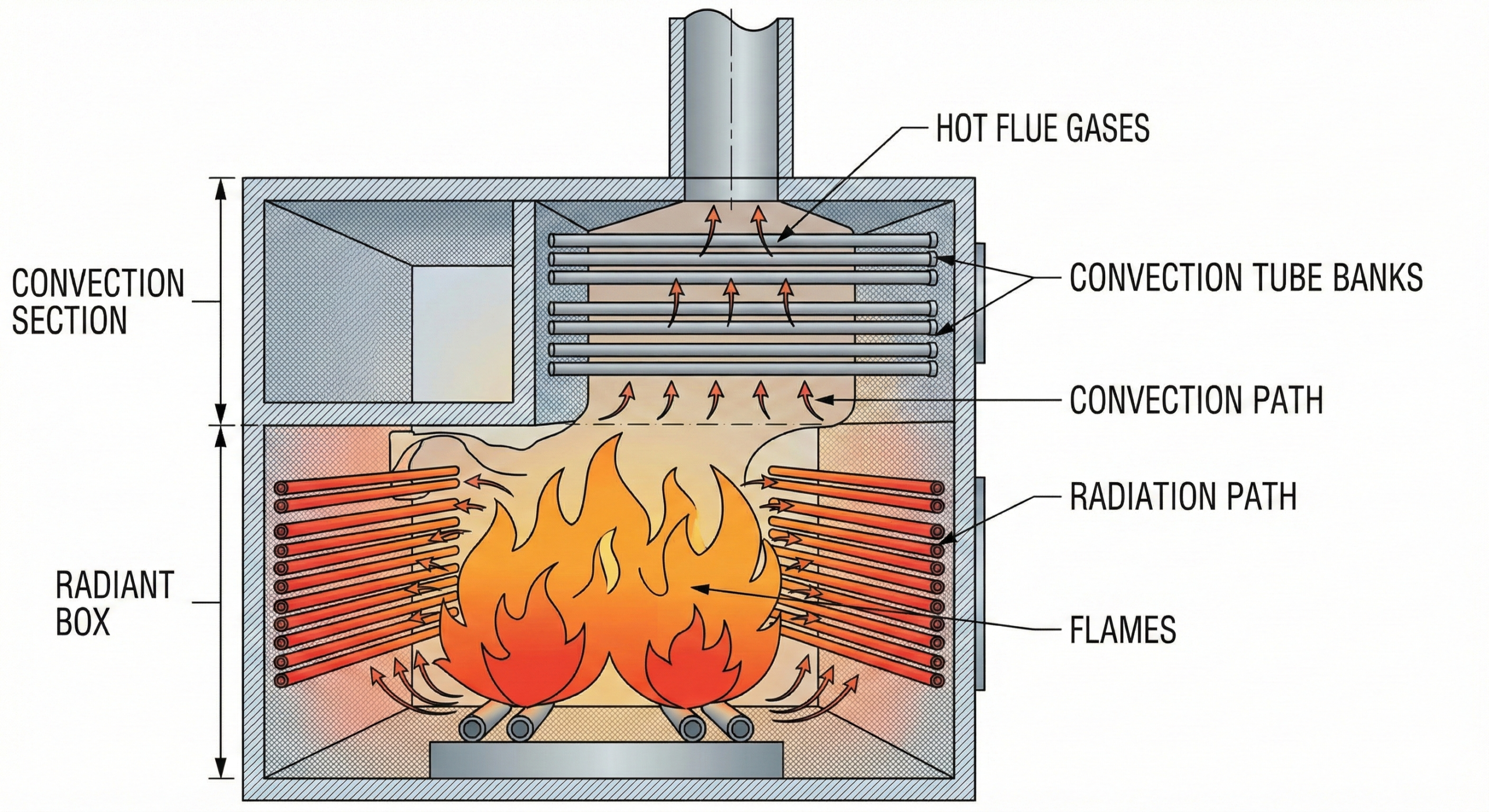
Inside a fired heater, fuel burns and releases heat.
That heat reaches process tubes in two main ways:
- Radiation from flames and hot surfaces
- Convection from hot flue gases flowing around tubes
These two mechanisms exist together.
But they behave very differently.
Radiation: Heat Transfer Without Contact
Radiation does not need a medium to transfer heat.
It moves as energy waves from:
- flames
- hot refractory walls
- hot gases
directly to the process tubes.
This happens even if the air around is not moving much.
Radiation becomes very strong at high temperatures.
And fired heaters operate at very high temperatures.
So radiation naturally plays a major role.
Convection: Heat Transfer Through Moving Gas
Convection occurs when hot flue gases:
- flow over tube surfaces
- transfer heat through direct contact
This happens in:
- the convection section of the heater
- the upper areas where gases pass over tube banks
Convection is driven by:
- gas movement
- temperature difference
- gas velocity
It is important, but it behaves differently from radiation.
Where Radiation Dominates
In the radiant section of a fired heater:
- flames are present
- refractory walls are extremely hot
- temperatures are very high
Here, radiation is the primary mode of heat transfer. This dominant role of radiation is what fundamentally separates furnace behavior from most other process equipment.
Most of the heat entering the tubes in this zone comes from:
- direct flame radiation
- radiation from hot walls
- radiation from hot combustion gases
This is why the section is called the radiant box.
Why Radiation Is So Powerful in Fired Heaters
Radiation increases very rapidly with temperature.
At the high temperatures inside furnaces:
- radiation becomes extremely intense
- heat transfer rate is very high
This is why:
- tubes placed in the radiant section heat up quickly
- large amounts of energy can be transferred without direct gas contact
Even if gas flow slows slightly, radiation continues strongly.
Where Convection Becomes Important
As flue gases leave the radiant section, they move upward.
Their temperature starts dropping.
In the convection section:
- flames are no longer present
- gas temperature is lower
- radiation intensity reduces
Here, convection becomes the main mode of heat transfer.
Heat moves from:
- hot gases
- to tubes
- through direct contact and gas flow
This section recovers remaining heat from flue gases.
Radiation Handles the Bulk of the Duty
In many fired heater designs:
- a large portion of total heat transfer happens in the radiant section
- convection section handles the remaining heat recovery
So while both mechanisms are important, radiation usually contributes the majority of the main heating duty.
Convection plays a supporting role.
Why People Often Overestimate Convection
In many plant discussions, convection is easier to understand.
People can see:
- gas flowing
- tubes in the gas path
- heat being carried by moving air
Radiation is less visible.
It happens silently and instantly.
So its importance is sometimes underestimated.
But in high-temperature environments, radiation is often the dominant force.
How Flame Shape Affects Radiation
Flame position strongly affects radiant heat transfer.
If flames are:
- well-shaped
- properly directed
- evenly distributed
tubes receive uniform radiation.
If flames are:
- too long
- touching tubes
- unevenly distributed
then:
- some tubes overheat
- others receive less heat
So radiation depends not just on temperature, but also on flame behavior.
Tube Placement Is Designed Around Radiation
In fired heaters, process tubes are carefully arranged.
In the radiant box:
- tubes are placed where they can receive strong radiant heat
- spacing is designed to balance exposure
This layout ensures efficient heat absorption.
The convection section then captures leftover heat.
When Convection Becomes More Important Than Usual
In some situations, convection plays a larger role:
- lower firing rates
- cooler flame temperatures
- during startup and warm-up
- in the upper furnace areas
At lower temperatures:
- radiation intensity drops quickly
- convection becomes more noticeable
So the balance between radiation and convection can shift.
Fouling in Convection Sections Reduces Performance
The convection section is more prone to fouling.
Because:
- flue gases carry particles
- dust and ash can settle
- deposits form on tubes
When fouling builds:
- gas flow is disturbed
- heat transfer reduces
- pressure drop increases
This mainly affects convection heat transfer. Similar deposit-related problems also reduce radiant heat absorption when furnace tube surfaces become dirty.
Radiation is less affected by surface deposits compared to convection.
Why Radiant Section Problems Are More Serious
Since most heat duty comes from radiation:
- problems in the radiant section affect performance more strongly
Examples include:
- poor flame distribution
- refractory damage
- tube misalignment
These reduce radiation effectiveness.
And when radiation drops, the convection section cannot fully compensate.
Operator Perspective: What Changes Reveal the Balance
Operators often notice changes like:
- higher fuel consumption
- uneven tube temperatures
- changes in flue gas temperature
These can signal shifts in:
- radiation effectiveness
- convection heat recovery
Understanding which section dominates helps in diagnosing issues more accurately.
Owner Perspective: Design Focus Reflects the Dominance
From a design and cost perspective:
- the radiant section is often the most critical part
- it handles the main energy transfer
- it defines heater capacity
The convection section improves efficiency by recovering heat that would otherwise escape.
So both are important, but their roles are different.
A Simple Way to Picture the Difference
Imagine standing near a fire.
You feel heat strongly even without touching the air flow.
That is radiation.
Now imagine warm air blowing toward you.
That is convection.
In a fired heater:
- tubes near flames receive intense radiant heat
- tubes higher up receive heat from flowing hot gases
Both heat them, but radiation usually provides the stronger push.
Final Perspective
Inside a fired heater, radiation and convection work together.
But they are not equal partners.
Radiation dominates where temperatures are highest and flames are present.
Convection supports by recovering remaining heat as gases move away.
Understanding this balance helps explain:
- why tube placement matters
- why flame control is critical
- why fouling in convection banks reduces efficiency
- why radiant section problems affect performance most
Understanding furnace heat transfer also requires recognizing how geometry, emissivity, and surface condition continuously influence radiant performance.
Knowing who really dominates inside a fired heater gives a clearer picture of how heat is actually transferred — and where attention matters most.
What Comes Next
If radiation dominates heat transfer inside fired heaters, another hidden factor becomes extremely important:
How effectively furnace surfaces emit and absorb radiant energy.
Effect of Surface Emissivity in Real Furnaces
This article explains how emissivity influences radiant heat transfer inside furnaces and why surface condition quietly affects efficiency, tube heating, and long-term furnace performance.
Explore the complete series in the Heat Transfer Engineering Hub.
A practicing chemical engineer with 17+ years of experience in process design, project execution, commissioning, and plant operations. Focused on practical engineering judgment beyond textbook explanations.