skip to content

July 14, 2026

processplantinsights.com

processplantinsights.com

  • About
  • Heat Transfer
  • Heat Exchanger
what controls overall heat transfer coefficient in heat exchangers
PPI February 12, 2026 0

What Really Controls Heat Transfer Coefficient in Exchangers – Why U Is Not a Value You “Pick” But a Value the Plant Creates

The overall heat transfer coefficient U is often treated as if it comes from a table. In design offices, it is common to hear: But real exchangers do not behave…

READ MORE +
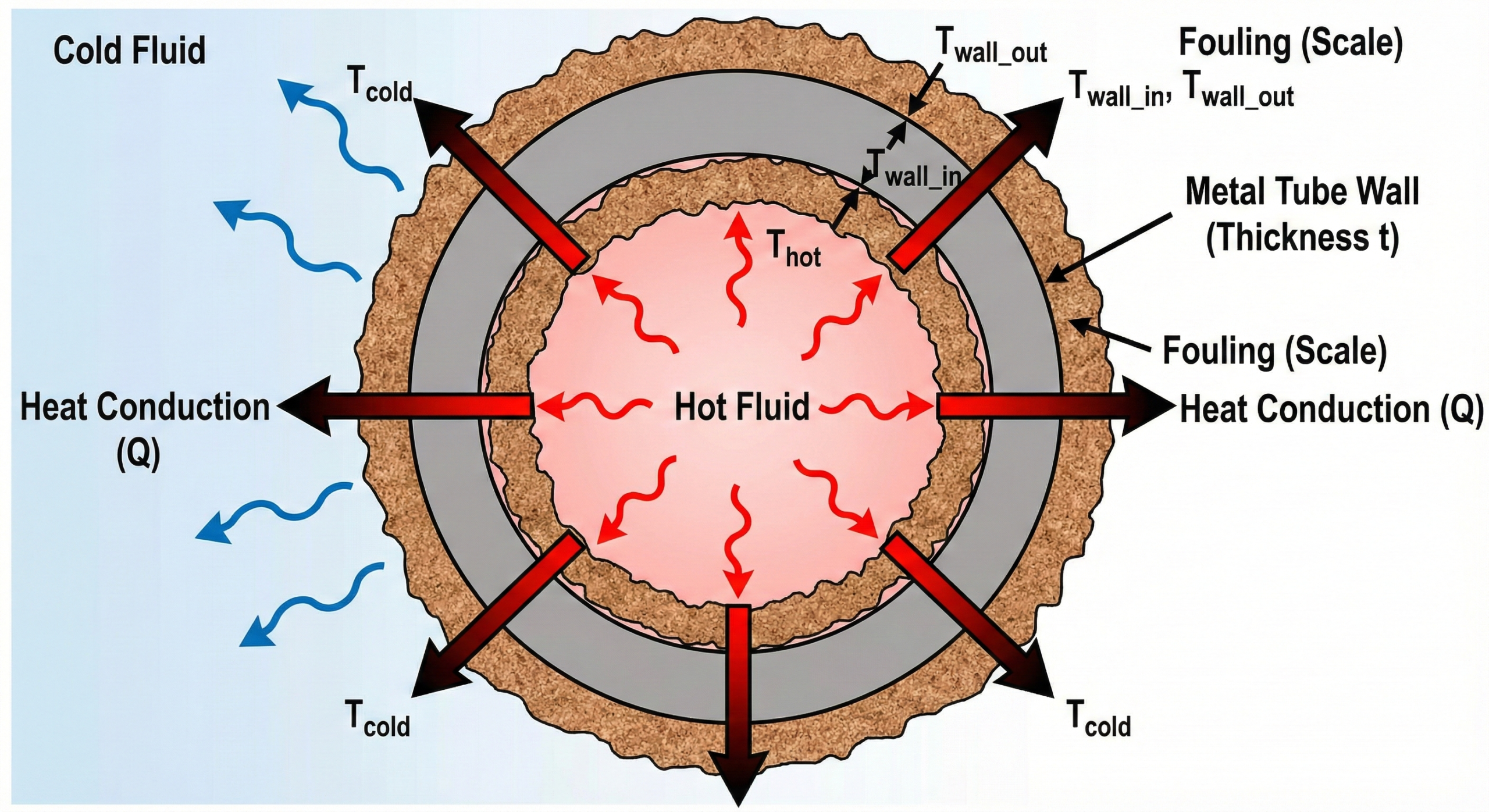
thermal resistance layers forming overall heat transfer coefficient U
PPI February 11, 2026 0

How U Is Built from Film + Wall + Fouling Resistances – Why the Overall Heat Transfer Coefficient Is Never Just One Thing

The overall heat transfer coefficient — U — is one of the most used numbers in heat exchanger design. Overall heat transfer coefficient resistance comes from fluid films, wall conduction,…

READ MORE +
overall heat transfer coefficient resistance diagram
PPI February 10, 2026 0

Overall Heat Transfer Coefficient (U) – The Most Quoted Number in Heat Transfer and the Most Misunderstood

In process engineering, one symbol appears everywhere: U — the overall heat transfer coefficient. It is written on exchanger datasheets.It is used in sizing calculations.It is discussed in troubleshooting meetings.It…

READ MORE +
driving force for heat transfer is temperature difference opposed by resistance
PPI February 8, 2026 0

Driving Force for Heat Transfer Explained – Why Heat Moves at All and Why Rate Matters More Than Awareness

Heat transfer does not occur randomly.It is driven. In every process plant, heat moves because certain physical conditions exist. These conditions create a driving force — the reason heat starts…

READ MORE +
why LMTD is used instead of simple delta T in heat exchangers
PPI February 5, 2026 0

Why LMTD Is Used Instead of Simple ΔT – Because Heat Transfer Is Not Uniform Inside Real Equipment

A simple temperature difference, ΔT, feels intuitive. Hot in minus cold out seems like a reasonable way to describe how strongly heat transfer is driven. In real process equipment, however,…

READ MORE +
LMTD explained step by step in heat exchangers
PPI February 4, 2026 0

LMTD Explained Step by Step – Understanding Log Mean Temperature Difference Without Losing Physical Meaning

LMTD — Log Mean Temperature Difference — is one of the most widely used concepts in heat exchanger design and analysis. It appears simple in formula form, yet it is…

READ MORE +
LMTD temperature driving force in a heat exchanger showing how local temperature difference varies along equipment length
PPI February 3, 2026 0

LMTD & Temperature Driving Forces Explained – How Heat Transfer Is Actually Driven in Real Process Equipment

Every heat transfer calculation in process plants ultimately depends on one thing:temperature driving force. No matter how large the exchanger, how good the material, or how high the utility flow,…

READ MORE +
Heat duty in a process plant showing energy added and removed per unit time in heat exchanger operation
PPI February 1, 2026 0

Heat Duty – What Required Heat Transfer Really Means in Real Plants

In process engineering, heat duty is one of the most frequently used terms. It appears in datasheets, specifications, simulations, and operating discussions. Yet despite its frequent use, heat duty is…

READ MORE +
heat transfer quantification in process plants
PPI January 29, 2026 0

How Heat Transfer Is Quantified in Process Plants – Turning Physical Behavior into Engineering Decisions

Understanding that heat transfer occurs is only the beginning.Every real engineering decision depends on how much heat is transferred, how fast, and where. Those decisions begin with understanding the required…

READ MORE +
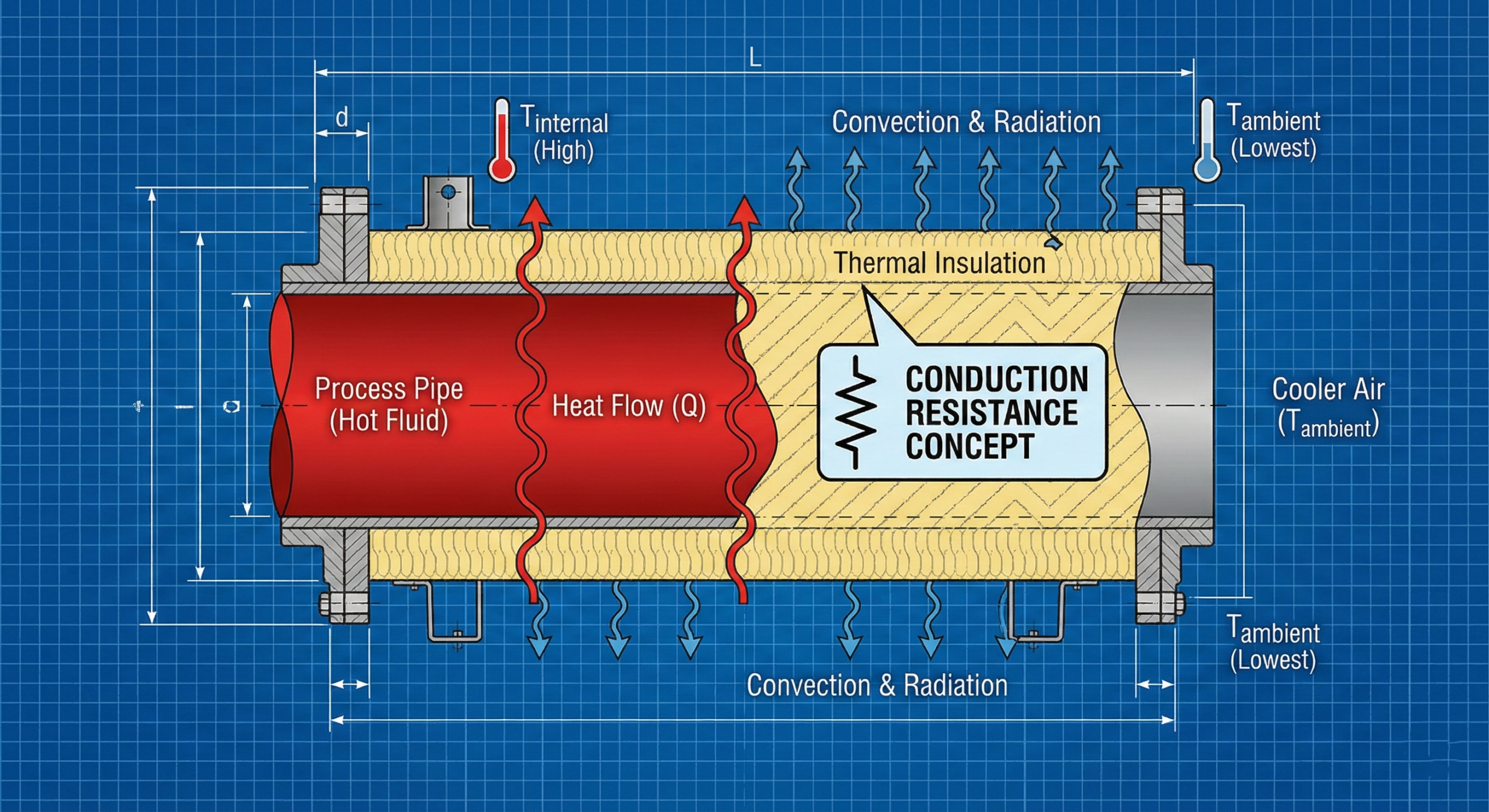
radiation heat transfer outside furnaces in process plants
PPI January 28, 2026 0

When Radiation Cannot Be Ignored – The Conditions Where Radiation Becomes the Controlling Heat Transfer Mode

In many process plants, radiation heat transfer is present but small. Under these conditions, conduction and convection dominate behavior, and radiation can be treated as a secondary effect. However, there…

READ MORE +

Posts pagination

Previous 1 … 7 8 9 10 Next

Recent Posts

  • TEMA Standards Explained – What TEMA Controls
  • TEMA Classification of Shell & Tube Heat Exchangers – Selection, Types & Engineering Logic
  • Process Conditions That Decide Heat Exchanger Type – The Duty Is Important, but Process Conditions Usually Make the Final Decision
  • Why Shell & Tube Remain the Backbone of Large Plants – The Most Widely Used Heat Exchanger Is Still the Most Practical for Heavy Industry
  • Compact Heat Exchangers – When Size Becomes Critical – When Plot Space, Weight, and Footprint Matter More Than Equipment Familiarity

Recent Comments

No comments to show.

Archives

  • July 2026 (2)
  • June 2026 (9)
  • May 2026 (15)
  • April 2026 (18)
  • March 2026 (18)
  • February 2026 (16)
  • January 2026 (12)
  • December 2025 (1)

Categories

  • Heat Exchanger
  • Heat Transfer
  • Terms & Conditions
  • Disclaimer
  • Privacy Policy
  • Contact

2026 processplantinsights.com | Blogging WordPress Theme by Legacy Themes