
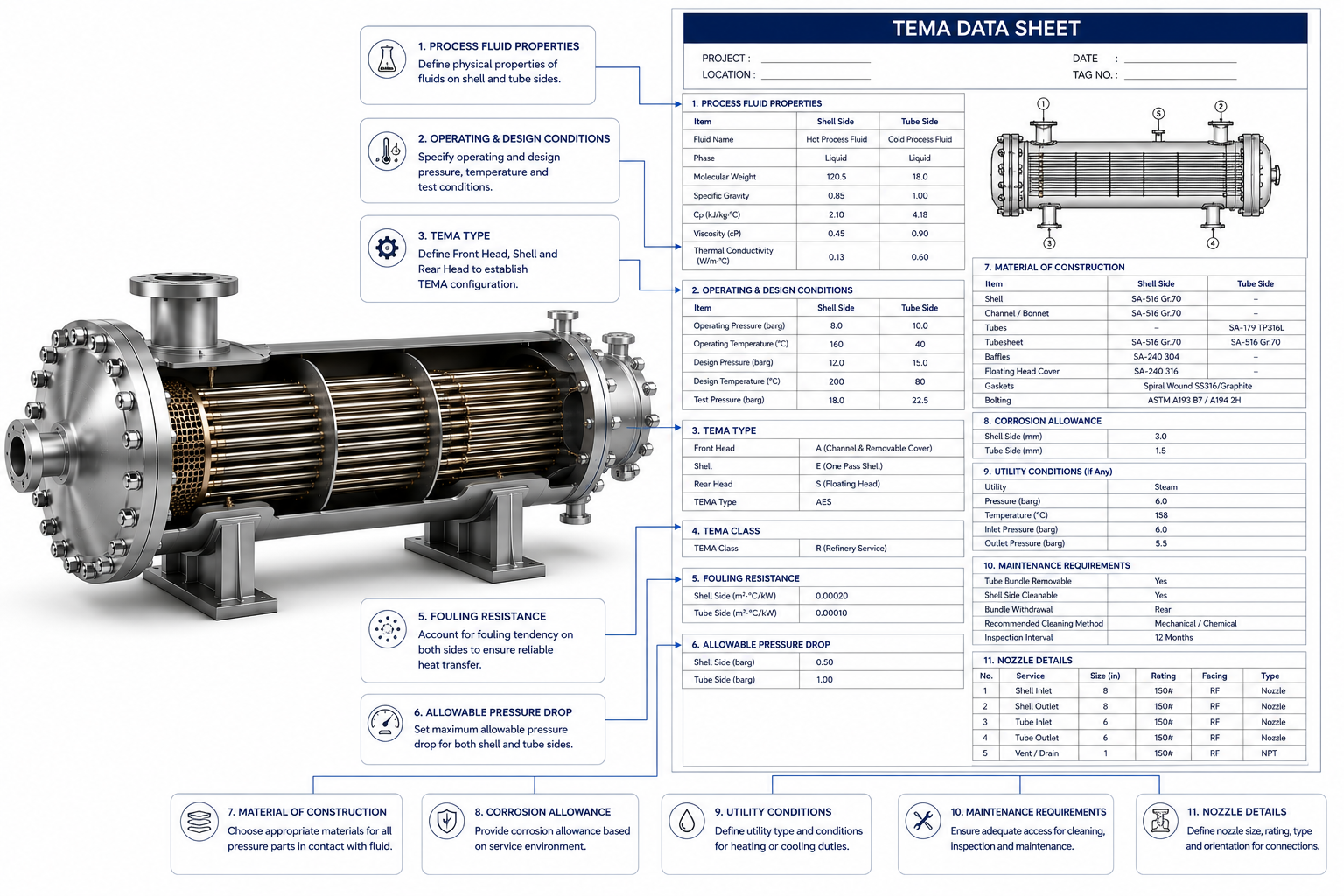
Critical TEMA Data Sheet Items Engineers Often Miss
A Heat Exchanger Is Only as Good as the Information Provided in Its Data Sheet In most engineering companies, the thermal design of a shell-and-tube heat exchanger begins with a…
A Heat Exchanger Is Only as Good as the Information Provided in Its Data Sheet In most engineering companies, the thermal design of a shell-and-tube heat exchanger begins with a…
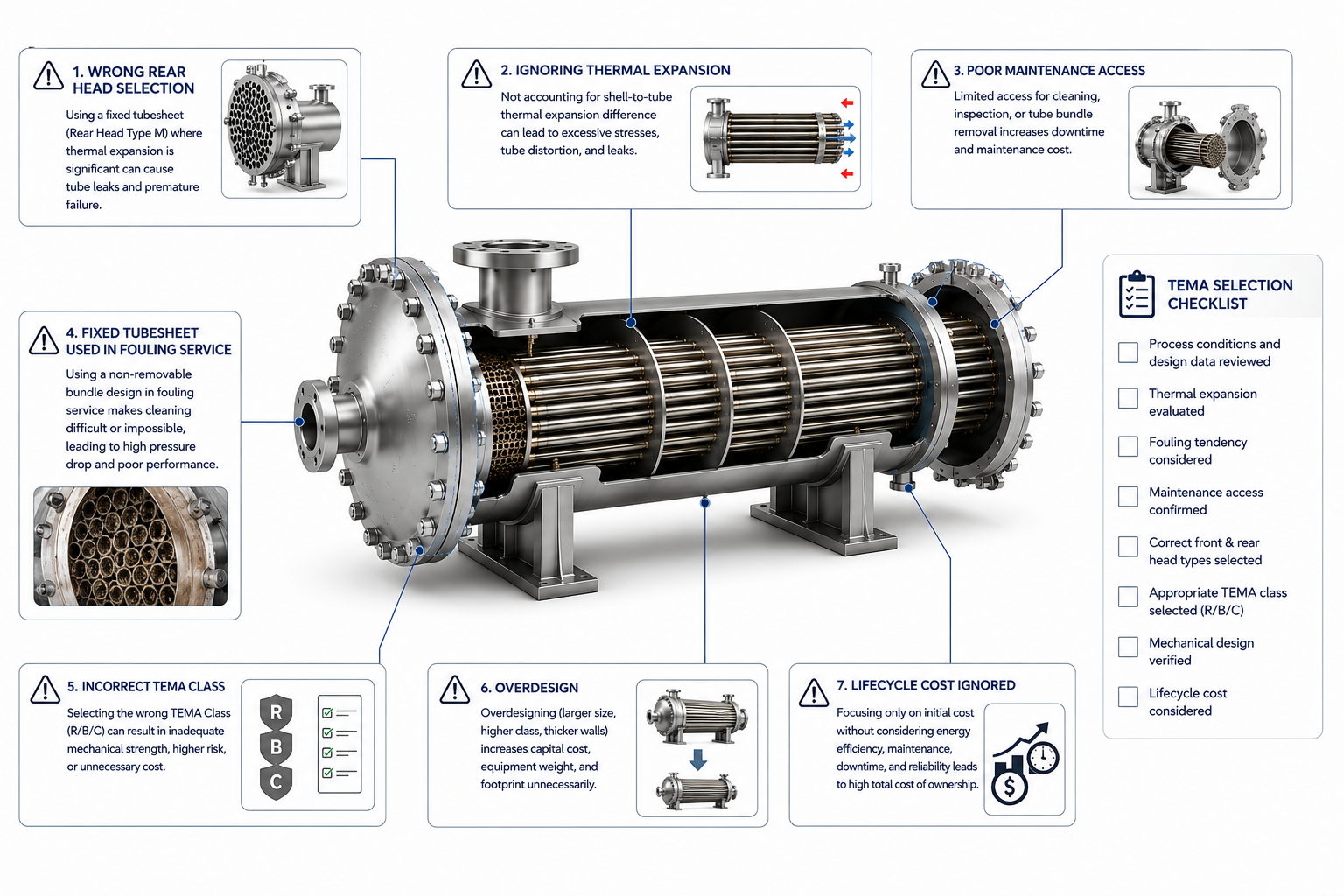
Most Heat Exchanger Problems Start During Selection—Not During Operation When a shell-and-tube heat exchanger underperforms, engineers often blame: Sometimes those are the real causes. But in many industrial plants, the…
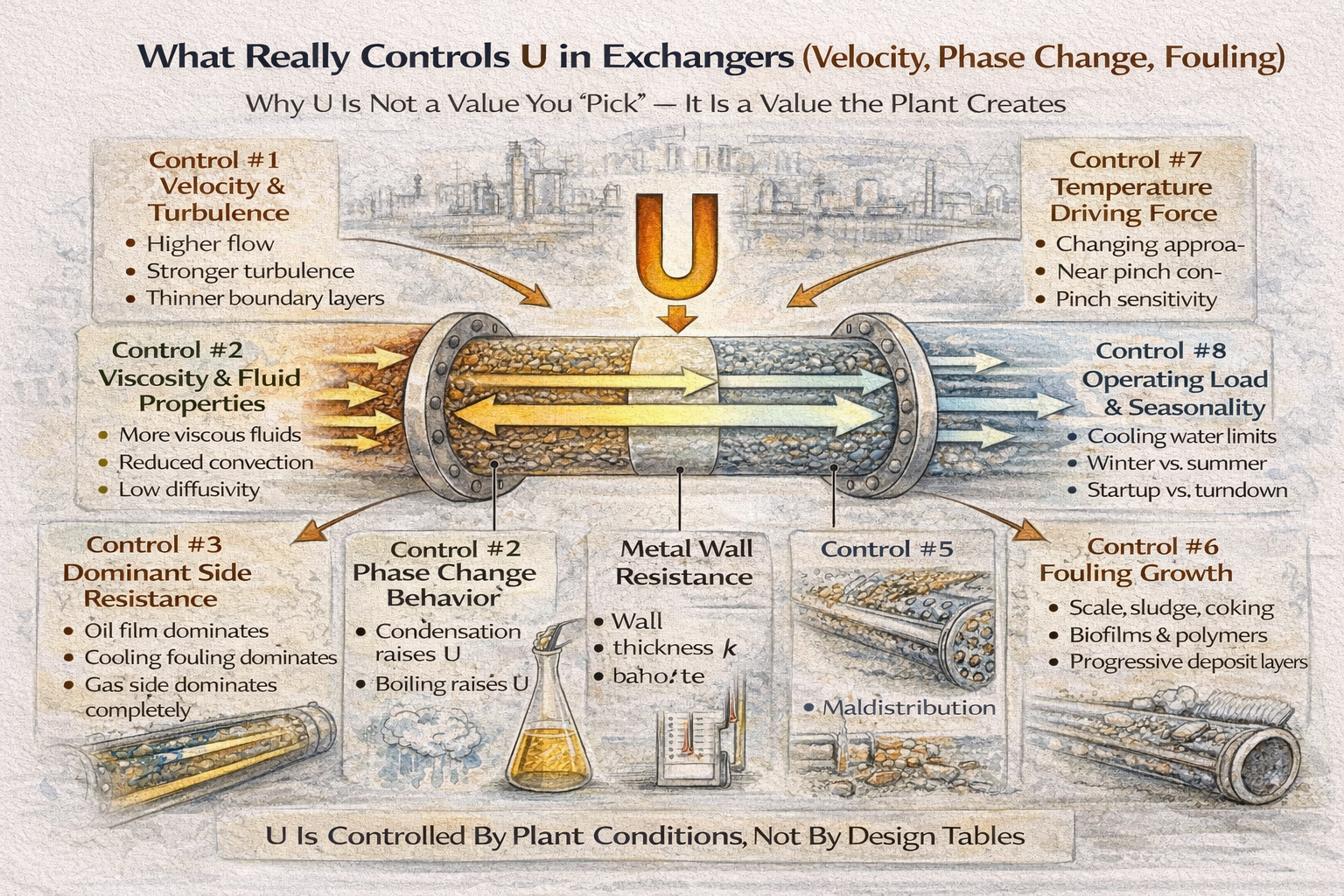
The overall heat transfer coefficient U is often treated as if it comes from a table. In design offices, it is common to hear: But real exchangers do not behave…
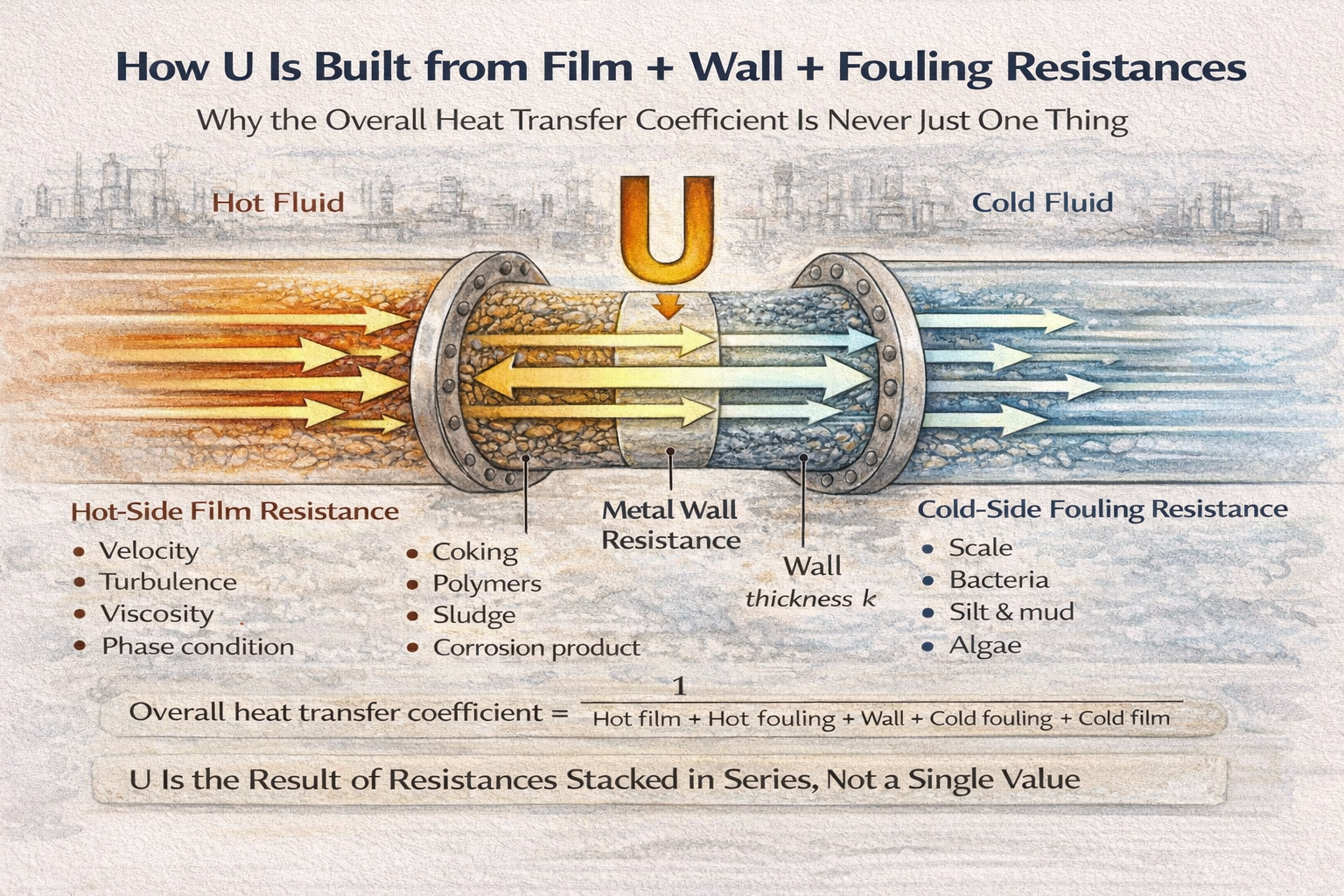
The overall heat transfer coefficient — U — is one of the most used numbers in heat exchanger design. Overall heat transfer coefficient resistance comes from fluid films, wall conduction,…
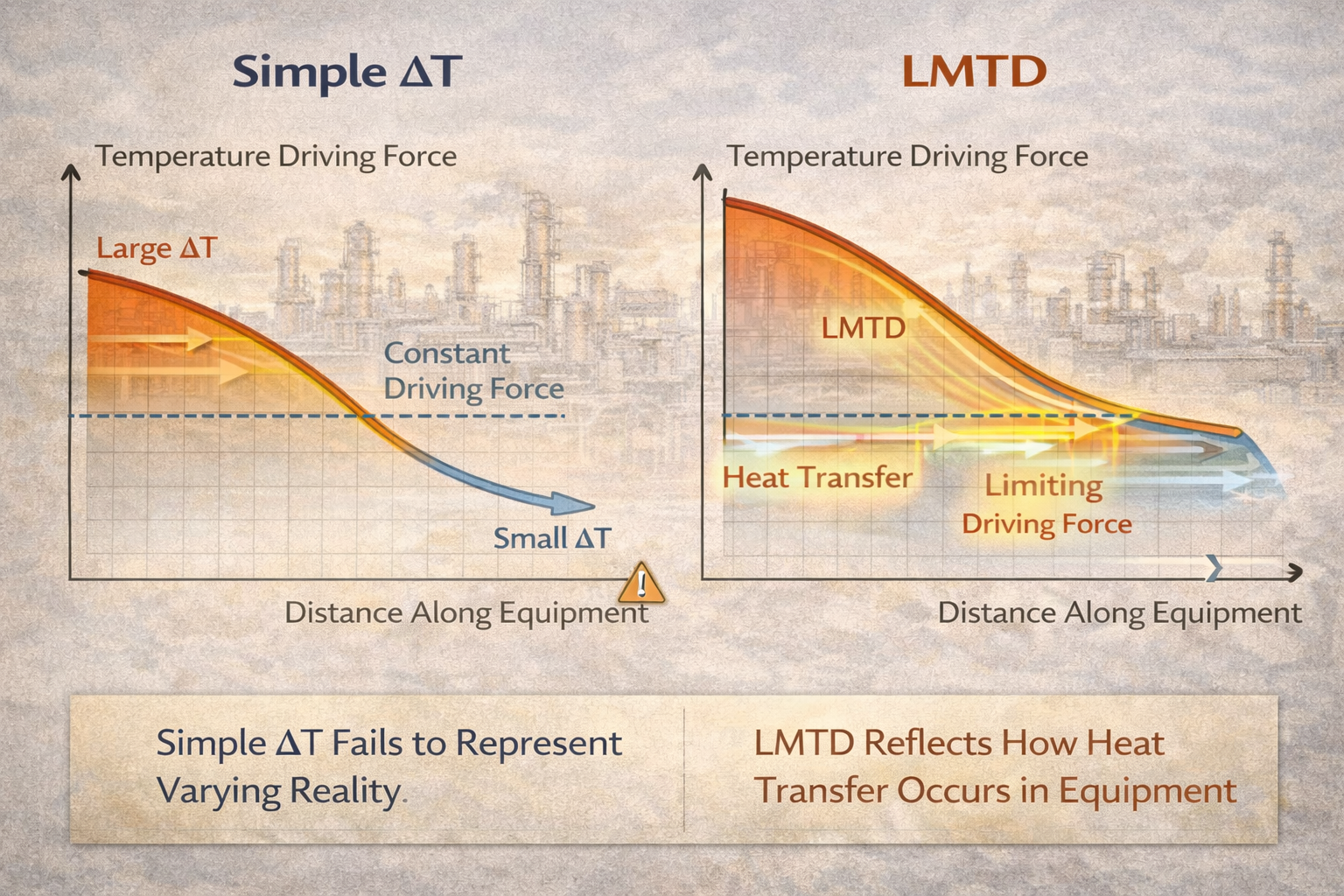
A simple temperature difference, ΔT, feels intuitive. Hot in minus cold out seems like a reasonable way to describe how strongly heat transfer is driven. In real process equipment, however,…
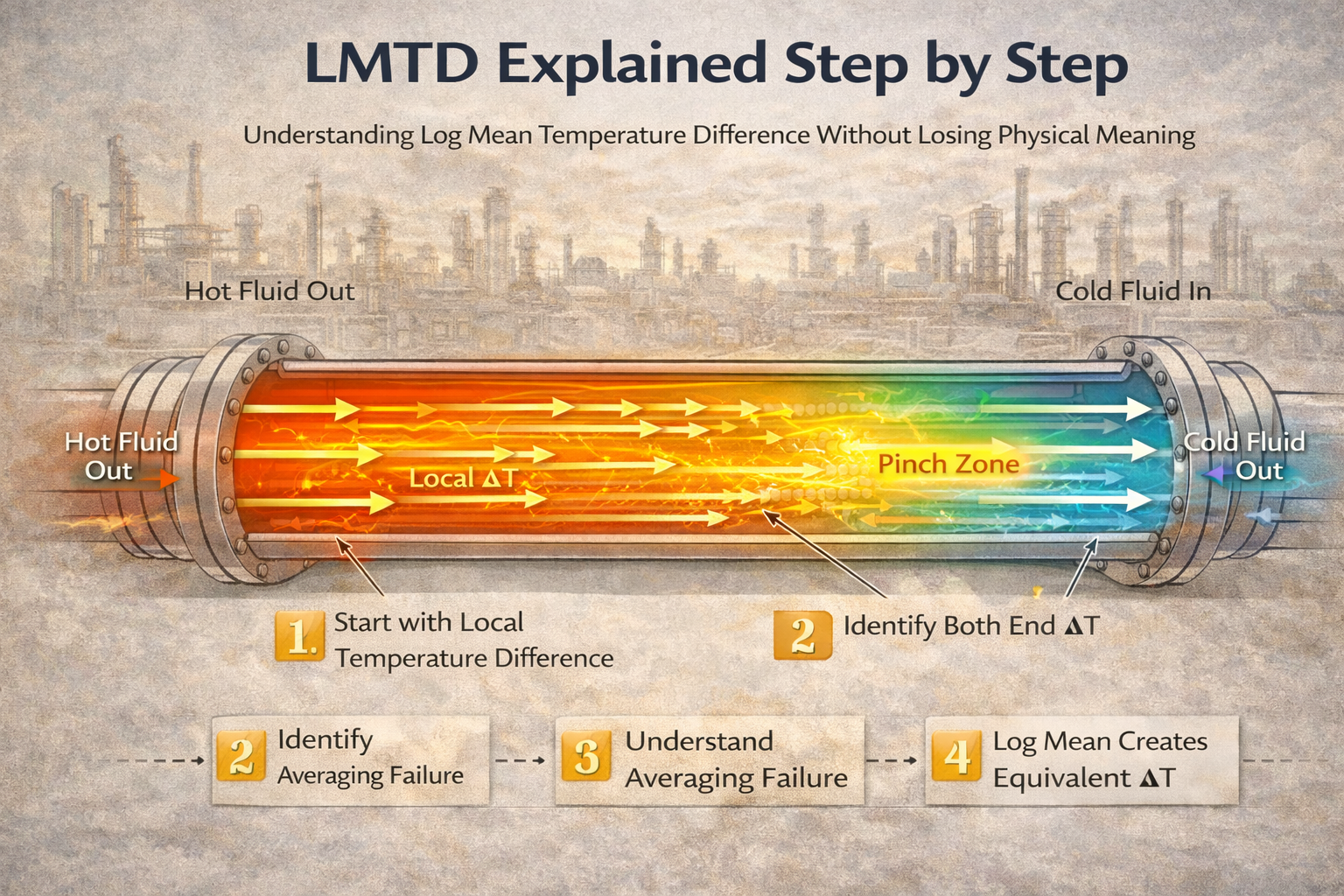
LMTD — Log Mean Temperature Difference — is one of the most widely used concepts in heat exchanger design and analysis. It appears simple in formula form, yet it is…
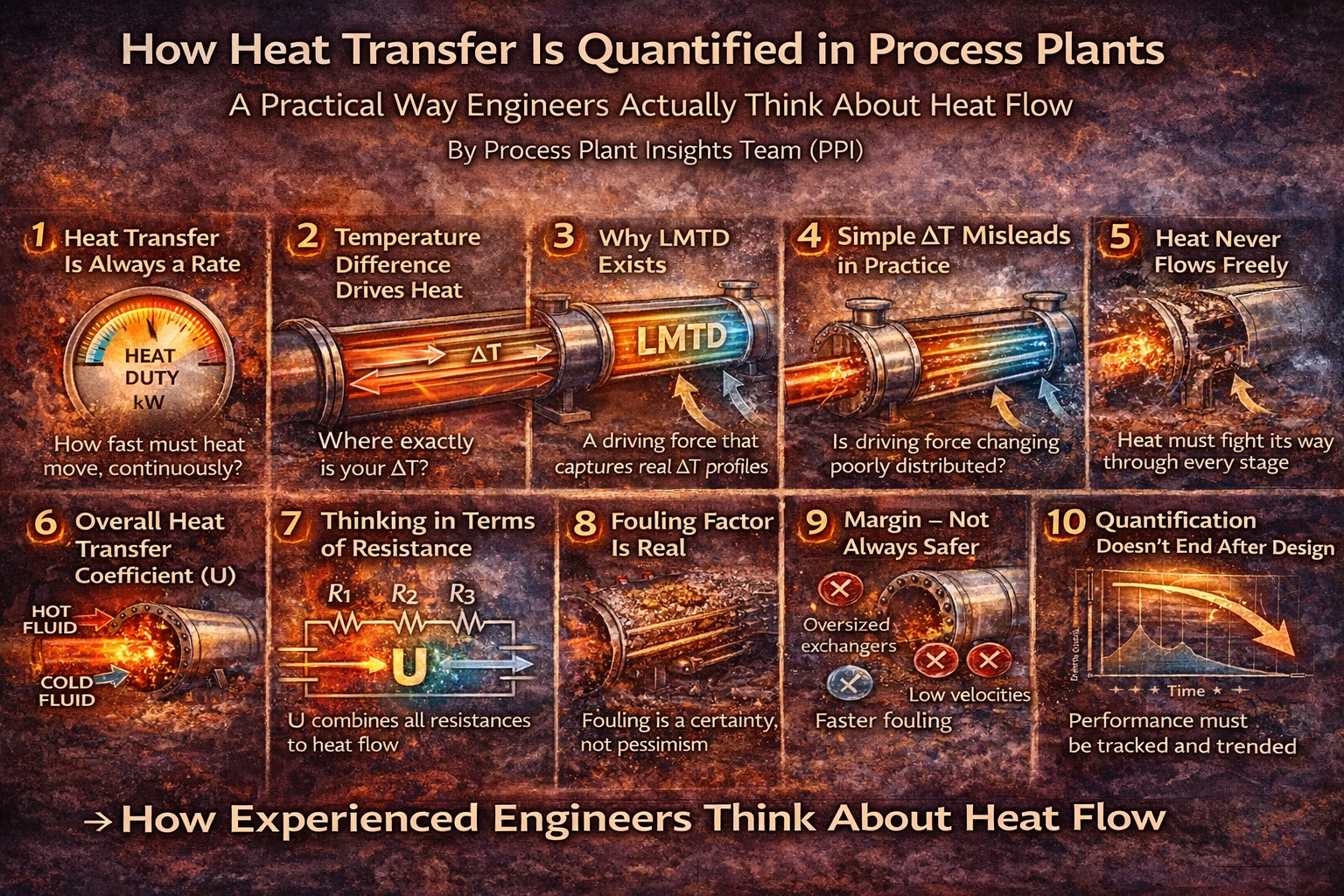
Understanding that heat transfer occurs is only the beginning.Every real engineering decision depends on how much heat is transferred, how fast, and where. Those decisions begin with understanding the required…
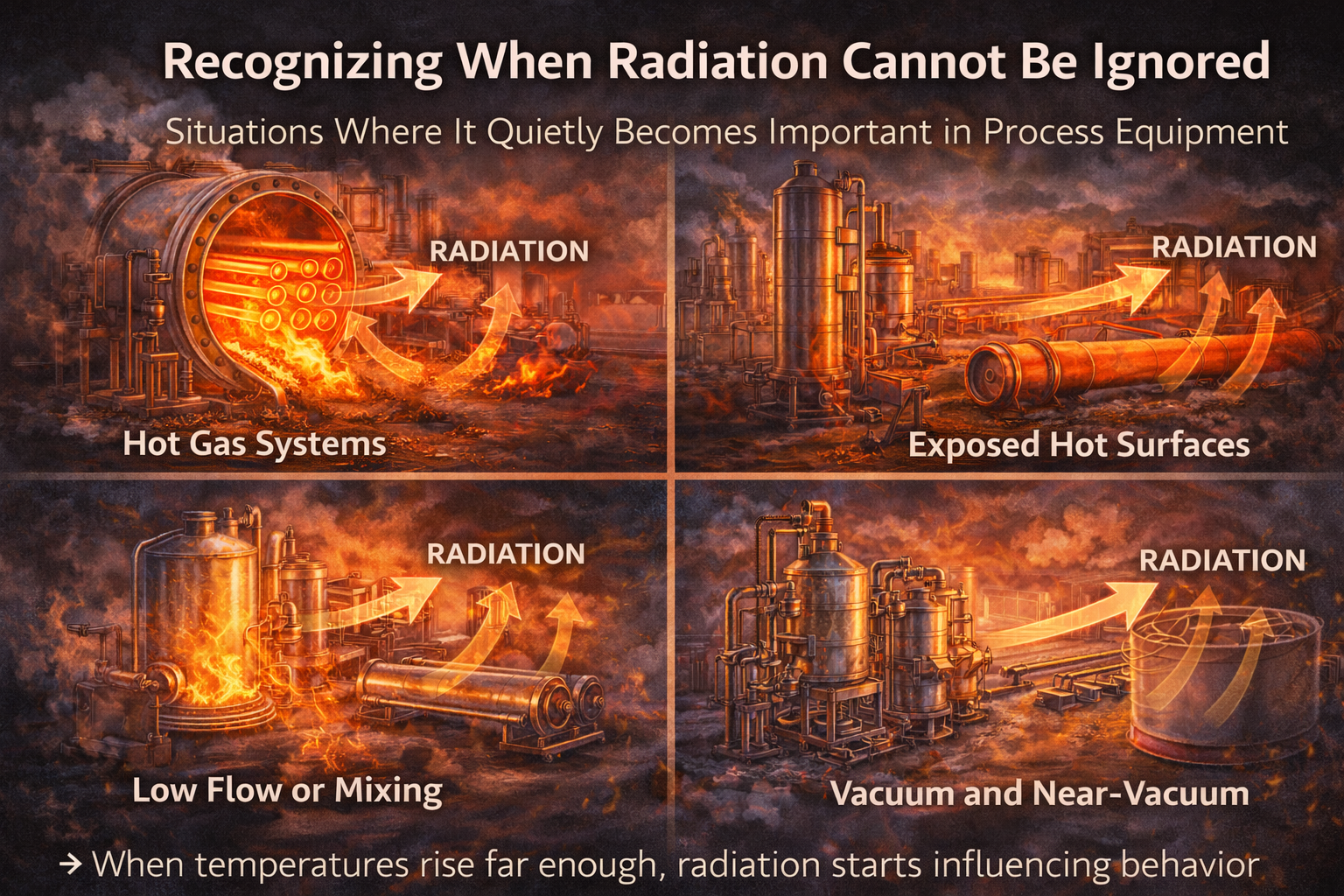
In many process plants, radiation heat transfer is present but small. Under these conditions, conduction and convection dominate behavior, and radiation can be treated as a secondary effect. However, there…
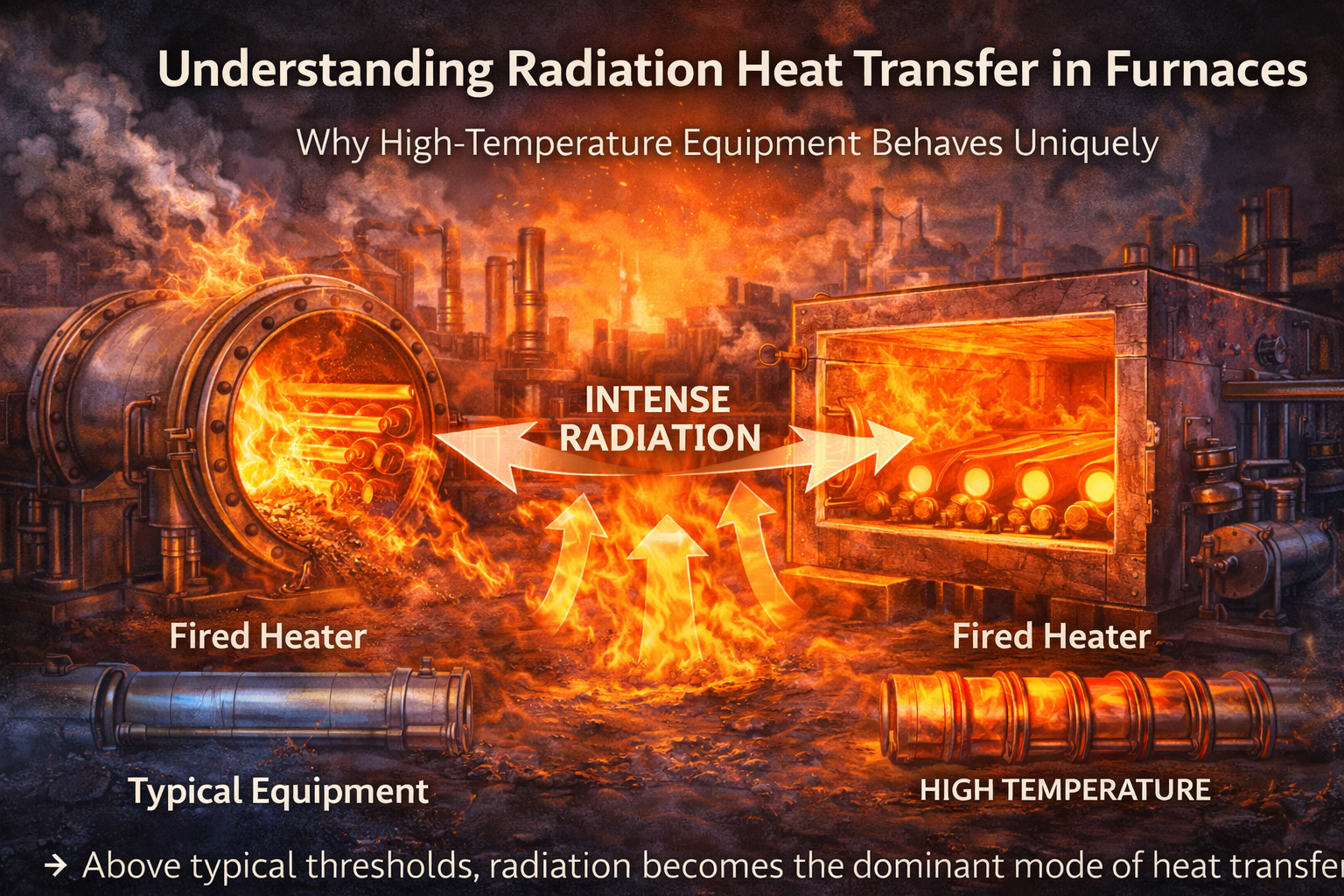
In fired heaters and furnaces, heat transfer behaves very differently from most other process equipment. Conduction and convection are still present, but they do not define performance in the same…
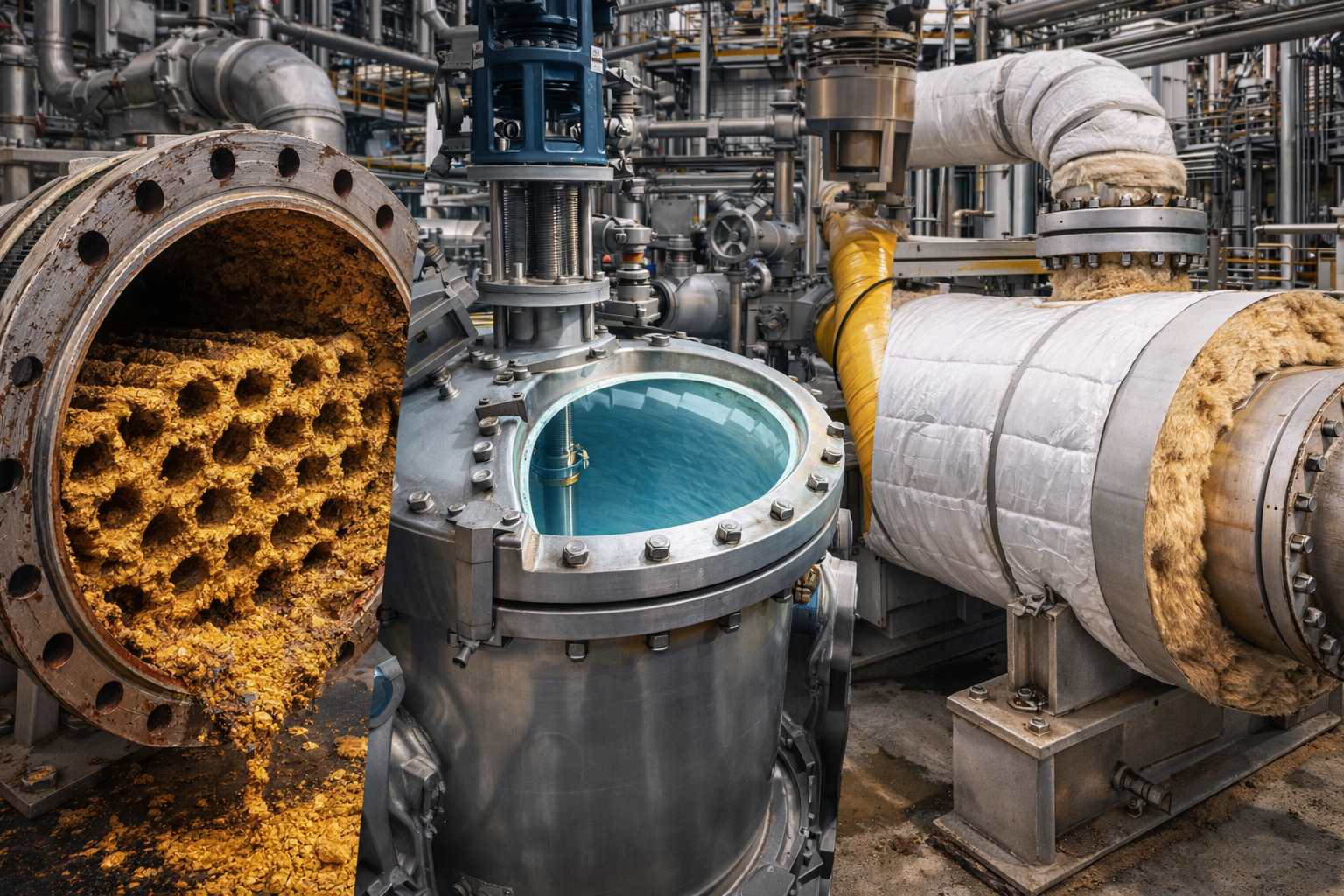
In process plants, heat transfer is often associated with flowing fluids, heaters, and exchangers. When nothing is moving, it is easy to assume that heat transfer has stopped or become…