Design Margin in Heat Exchanger Thermal Calculations
A design margin is not extra safety built into a heat exchanger for the sake of caution. It is a carefully considered allowance that helps the exchanger continue meeting process…
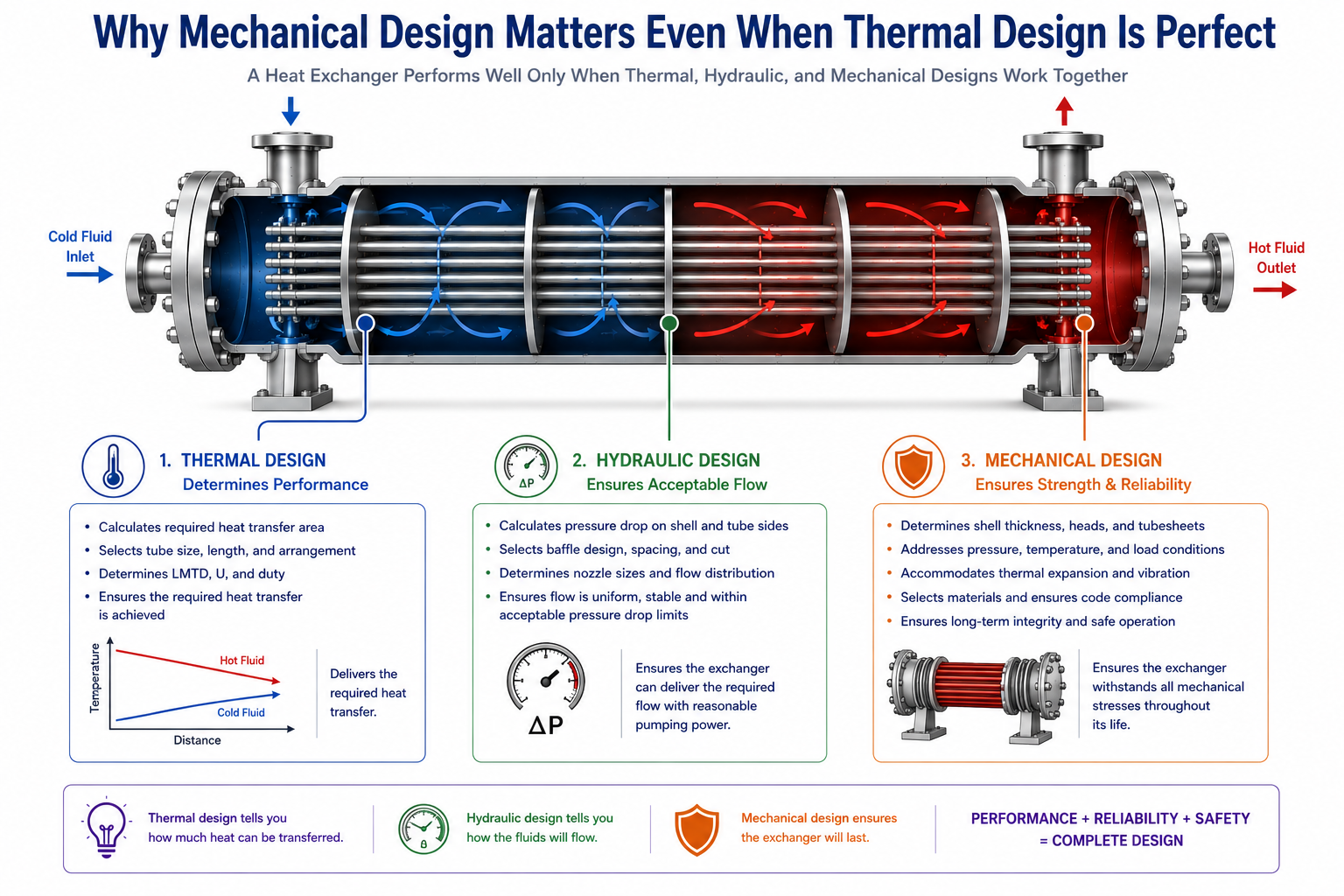
A heat exchanger can satisfy every thermal calculation during design and still fail to achieve the required performance after commissioning. The reason is usually not a mistake in the equations—it…
The Overall Heat Transfer Coefficient (U) is one of the most important parameters in heat exchanger design, yet experienced engineers rarely treat it as a fixed value from a handbook.…
Real heat exchangers rarely operate under ideal counterflow conditions. The correction factor exists because practical exchanger flow arrangements behave differently from the textbook assumptions used in LMTD calculations. Why Isn’t…
Heat Always Needs a Driving Force Heat naturally flows from a higher temperature to a lower temperature. Without a temperature difference: The larger the temperature difference, the easier it becomes…
Every Heat Duty Calculation Begins with Equations but Ends with Engineering Judgment One of the first calculations every process engineer learns is the heat exchanger duty equation: Q = m…
Why a Thermally Correct Heat Exchanger on Paper May Still Underperform in a Real Plant Heat exchanger thermal design is often viewed as a calculation exercise. An engineer receives a…
A Heat Exchanger Is Only as Good as the Information Provided in Its Data Sheet In most engineering companies, the thermal design of a shell-and-tube heat exchanger begins with a…
Most Heat Exchanger Problems Start During Selection—Not During Operation When a shell-and-tube heat exchanger underperforms, engineers often blame: Sometimes those are the real causes. But in many industrial plants, the…
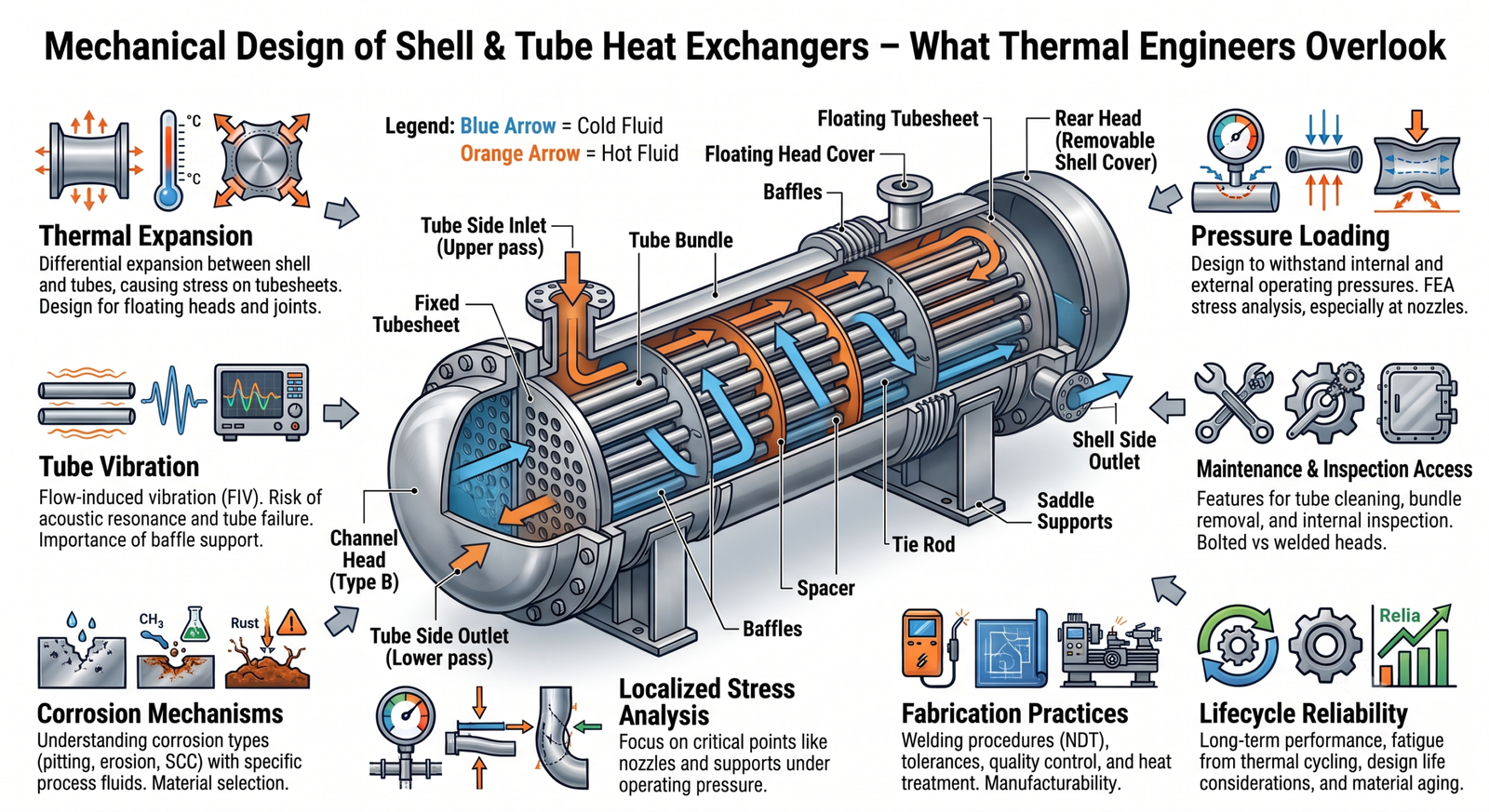
The Same Heat Duty Can Have Three Different TEMA Classes—and Three Very Different Lifecycle Costs When engineers discuss TEMA, they usually focus on designations like: These codes describe the exchanger’s…