skip to content

October 13, 2026

processplantinsights.com

processplantinsights.com

  • About
  • Heat Transfer
  • Heat Exchanger

Thermal Design

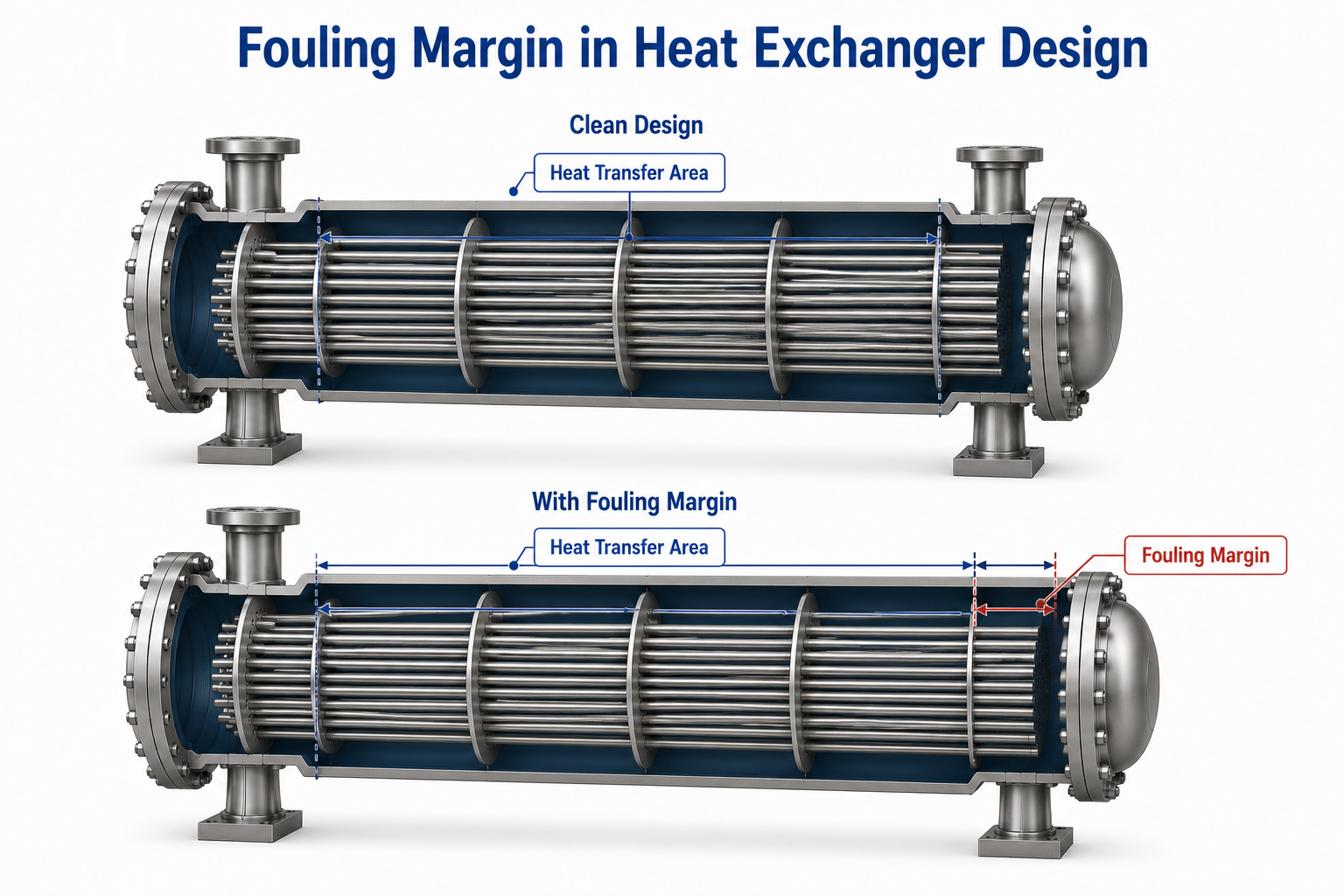
Fouling margin providing additional heat transfer area in a shell and tube heat exchanger
PPI October 11, 2026 0

Why Designers Add Fouling Margin in Exchangers

Every heat exchanger gradually loses thermal performance as deposits accumulate on its heat transfer surfaces. While the fouling factor represents the expected additional thermal resistance, the fouling margin is the…
READ MORE +
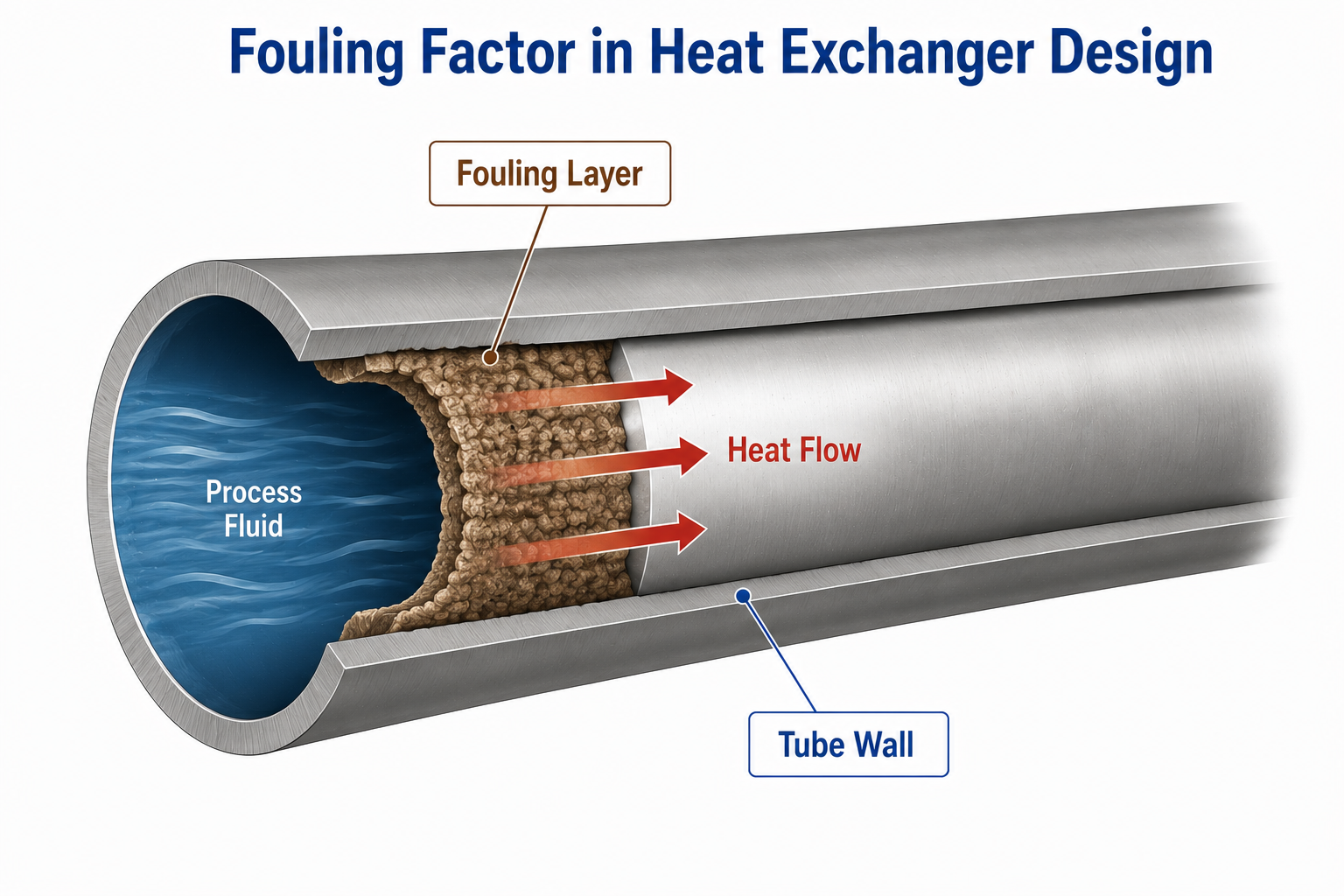
Fouling factor representing thermal resistance in a shell and tube heat exchanger
PPI October 8, 2026 0

Fouling Factor in Heat Exchanger Design – What It Really Represents

Every shell-and-tube heat exchanger is designed with the expectation that its heat transfer surfaces will gradually become less efficient during operation. Rather than assuming permanently clean conditions, engineers include a…

READ MORE +
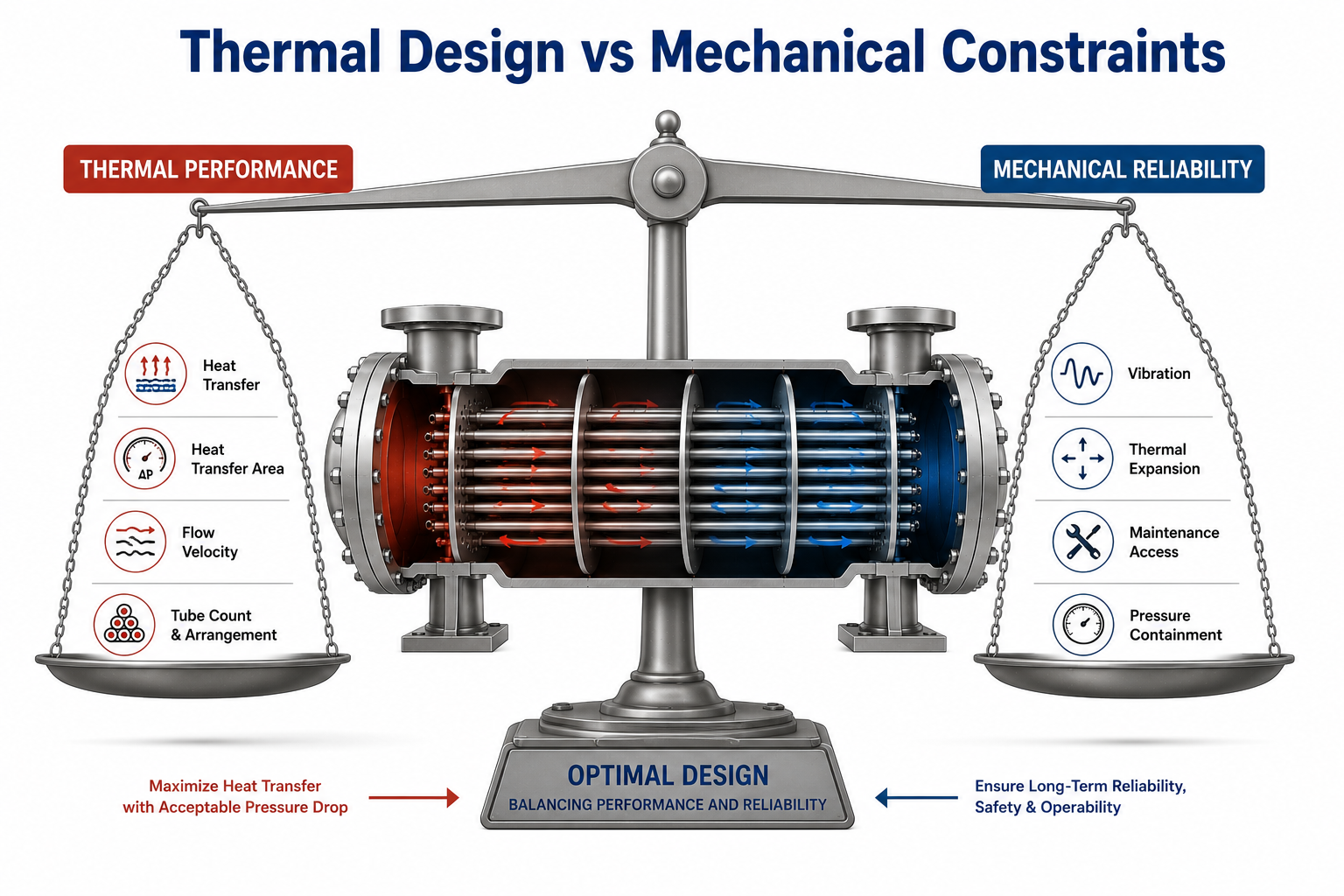
Thermal design balanced with mechanical constraints in a shell and tube heat exchanger
PPI September 24, 2026 0

Why Mechanical Constraints Limit Thermal Design

The thermally optimum heat exchanger is not always the mechanically practical one. While thermal design aims to maximize heat transfer and minimize energy consumption, every improvement must also satisfy mechanical…

READ MORE +
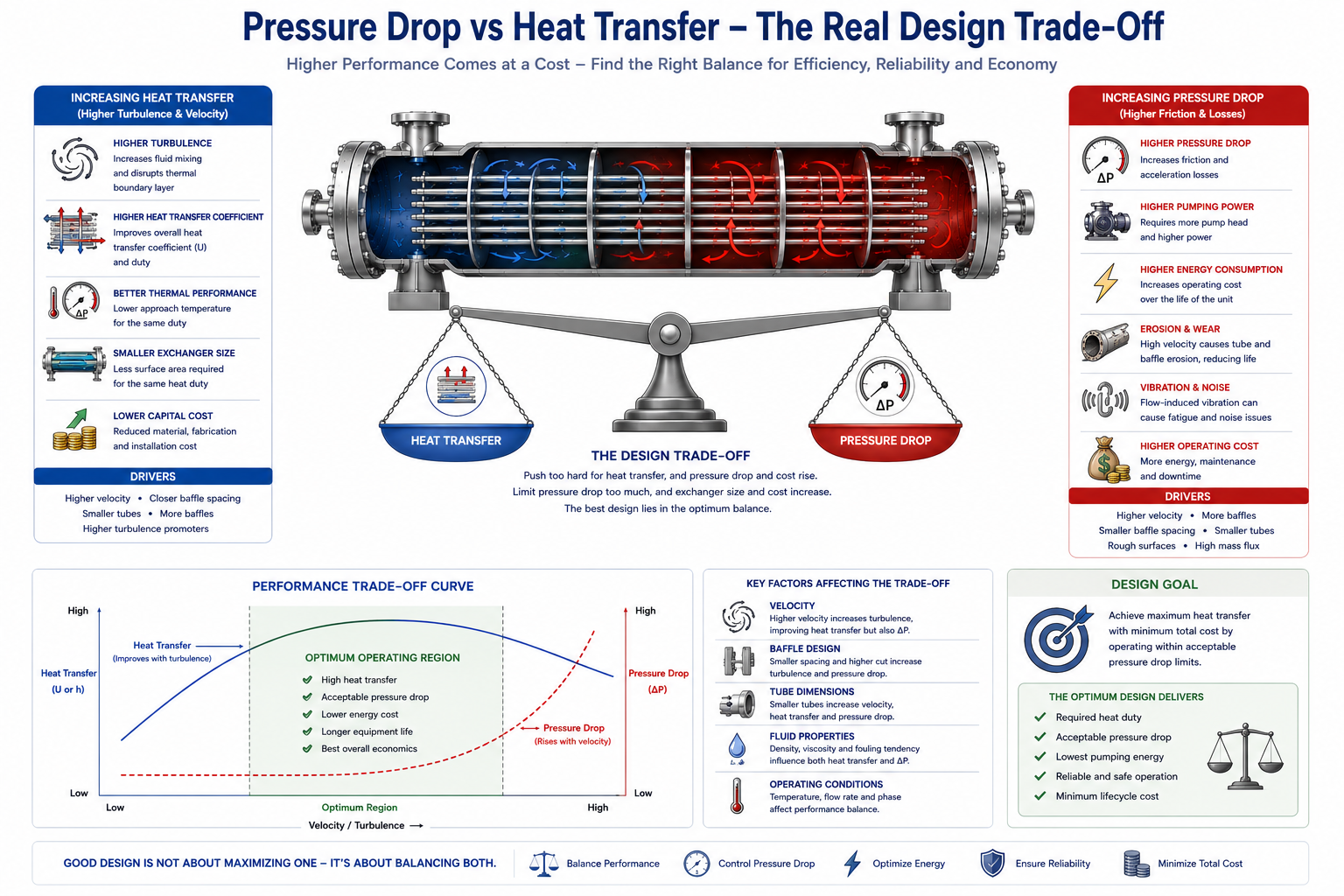
Pressure drop versus heat transfer trade-off in a shell-and-tube heat exchanger
PPI September 3, 2026 0

Pressure Drop vs Heat Transfer – The Real Design Trade-Off

Every heat exchanger designer faces the same engineering challenge: improving heat transfer almost always increases pressure drop, while reducing pressure drop usually weakens heat transfer. The objective is not to…

READ MORE +
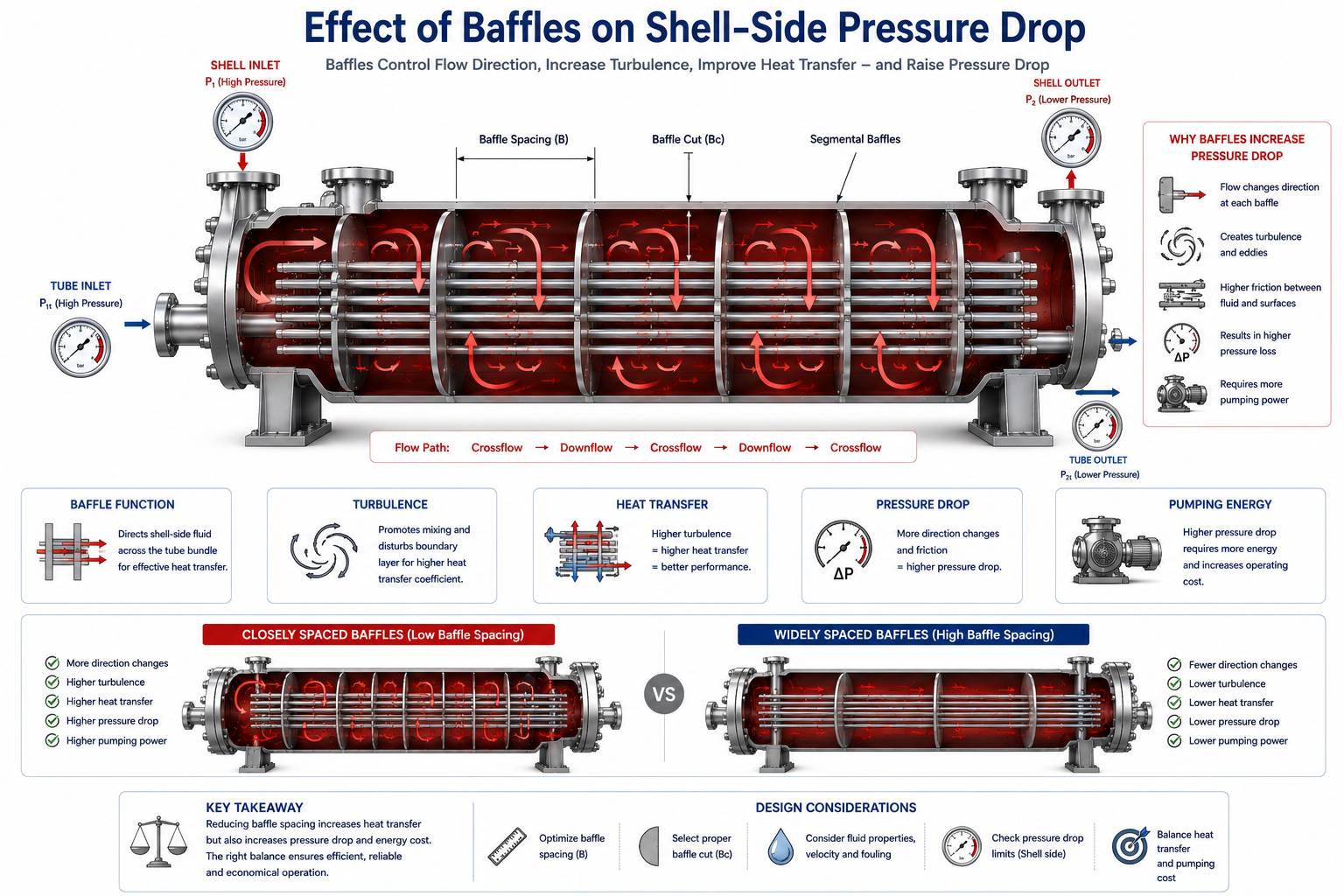
Effect of baffles on shell-side pressure drop in a shell-and-tube heat exchanger
PPI August 30, 2026 0

Effect of Baffles on Shell-Side Pressure Drop

Baffles are among the most important internal components of a shell-and-tube heat exchanger. They improve shell-side heat transfer by directing fluid across the tube bundle, but they also create additional…

READ MORE +
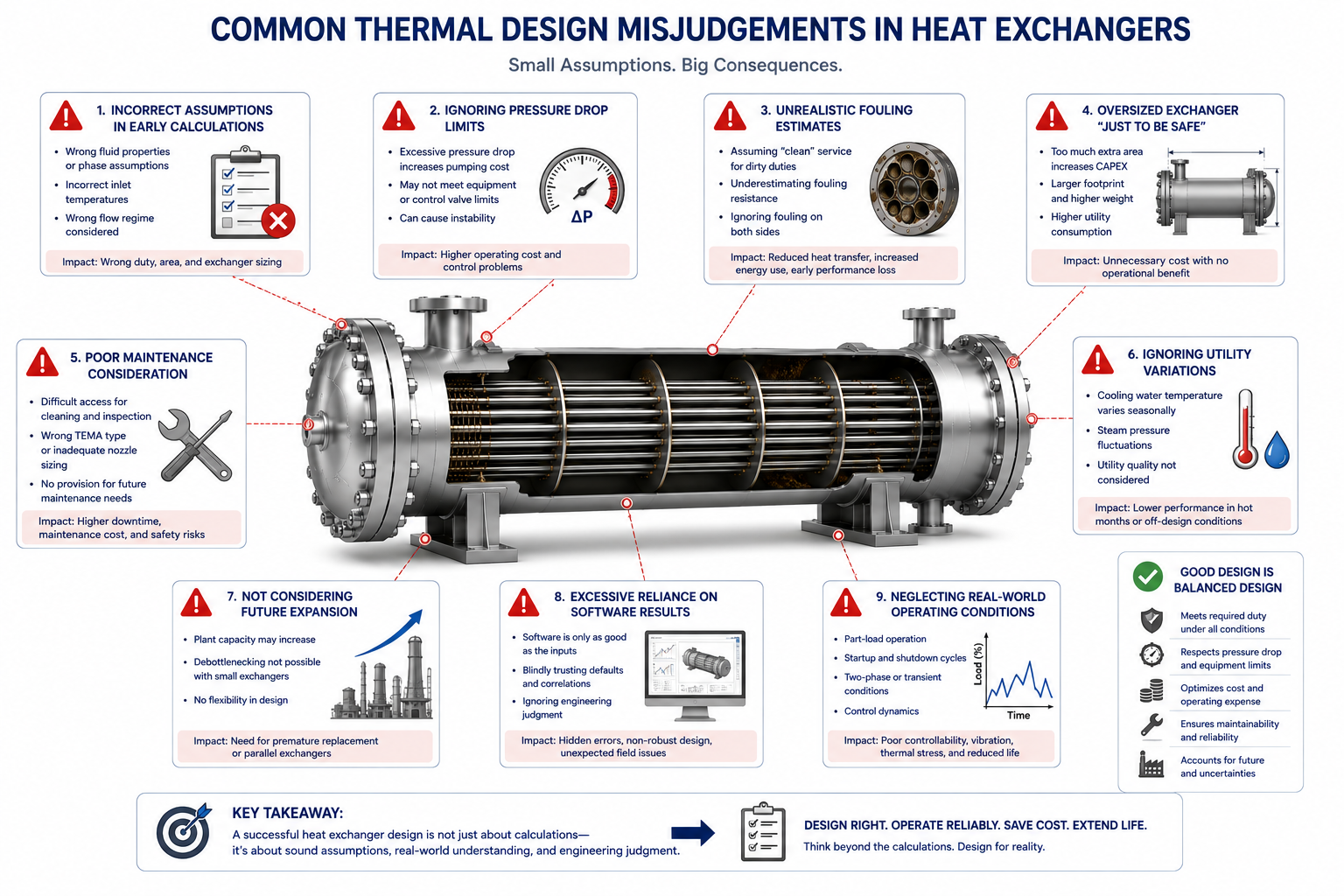
Common thermal design misjudgements that affect heat exchanger performance
PPI August 20, 2026 0

Common Thermal Design Misjudgements in Heat Exchangers

Most heat exchanger thermal design problems do not arise because engineers cannot perform the calculations. They arise because perfectly correct calculations are applied with incorrect assumptions, unrealistic expectations, or incomplete…

READ MORE +
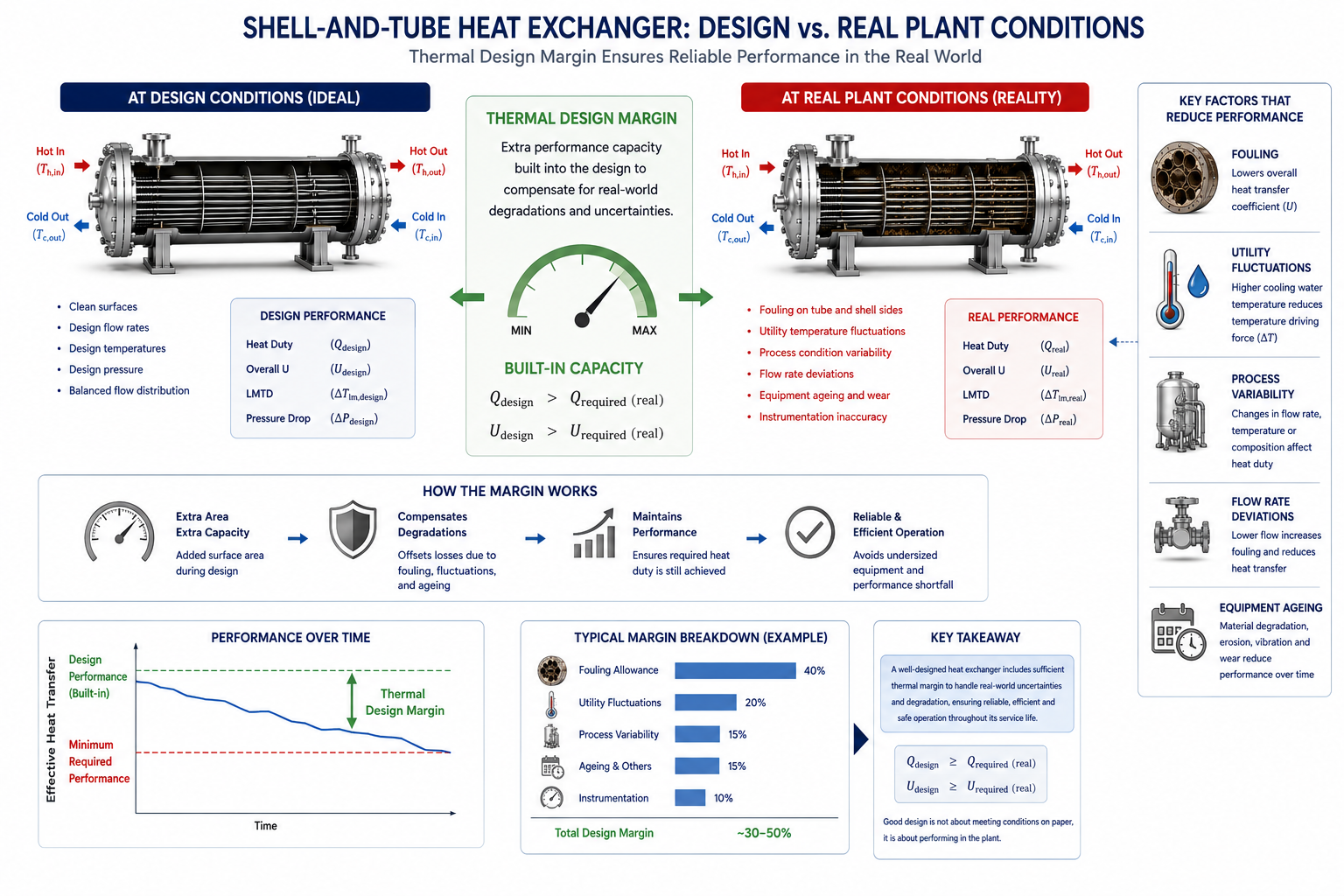
Heat exchanger thermal design margin balancing operating flexibility and lifecycle cost
PPI August 18, 2026 0

Design Margin in Heat Exchanger Thermal Calculations

A design margin is not extra safety built into a heat exchanger for the sake of caution. It is a carefully considered allowance that helps the exchanger continue meeting process…

READ MORE +
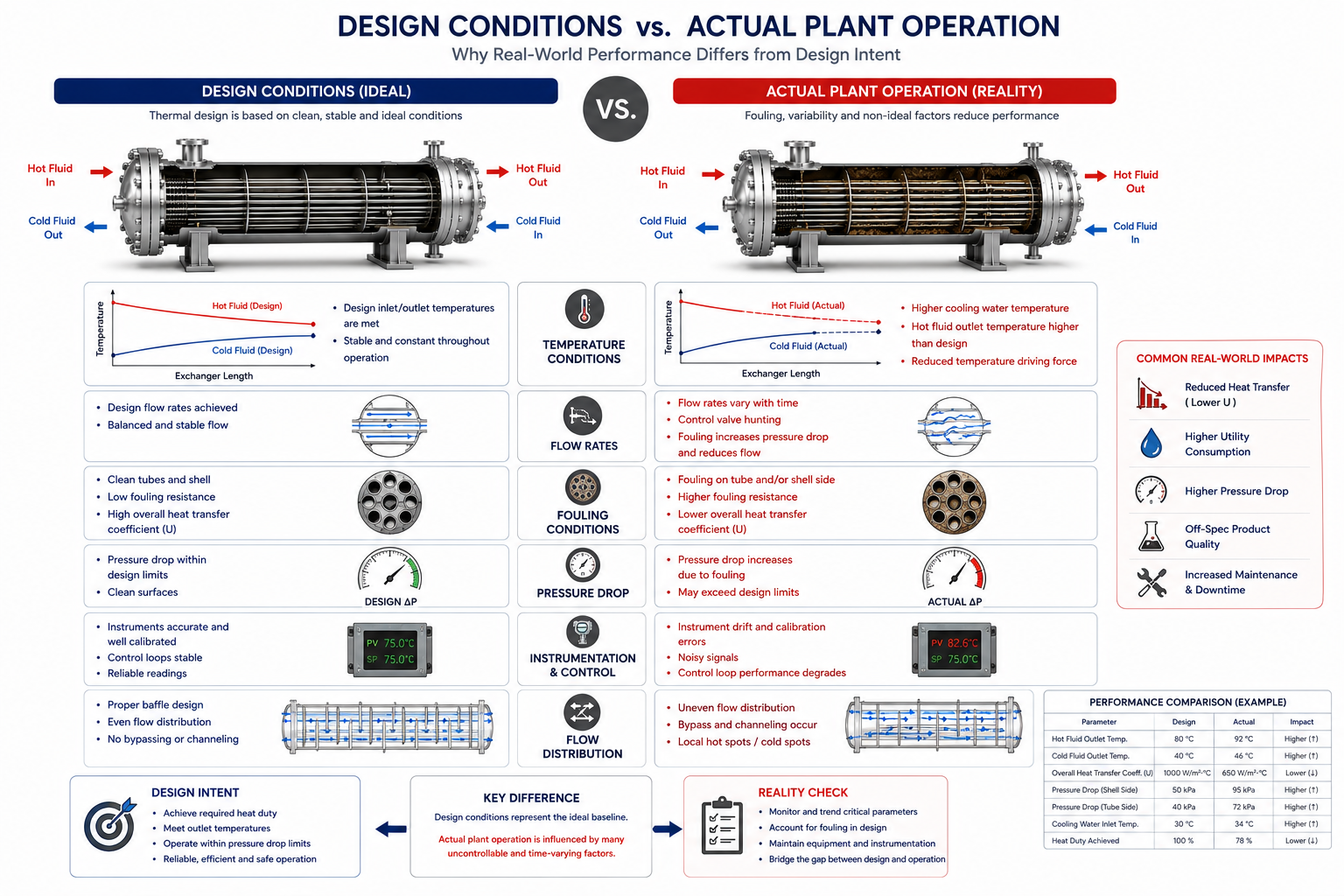
Heat exchanger thermal design failure due to fouling and changing plant conditions
PPI August 16, 2026 0

Why Exchanger Thermal Designs Fail in Operating Plants

A heat exchanger can satisfy every thermal calculation during design and still fail to achieve the required performance after commissioning. The reason is usually not a mistake in the equations—it…

READ MORE +
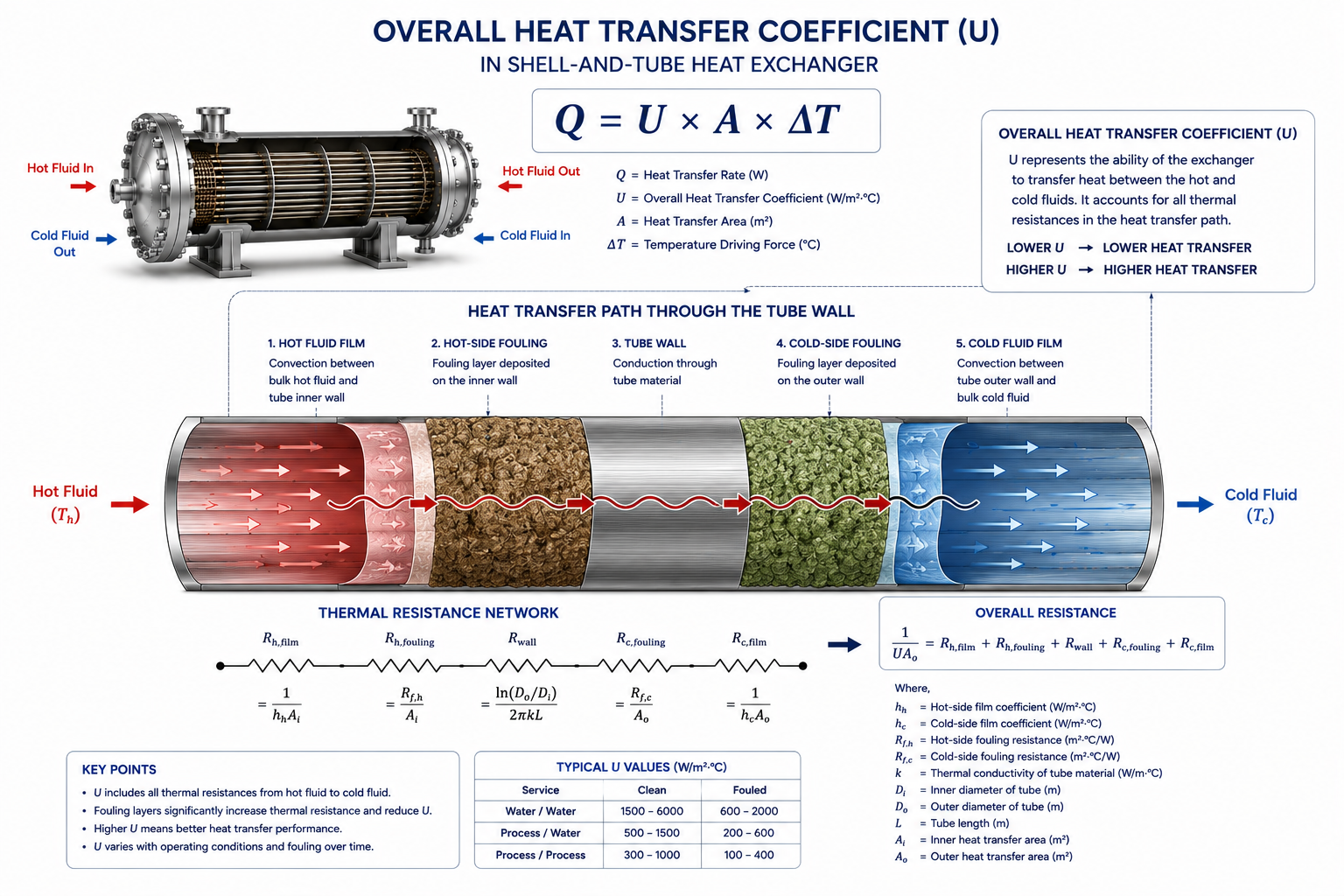
Overall heat transfer coefficient U in shell and tube heat exchanger thermal design
PPI August 13, 2026 0

How Engineers Use U in Heat Exchanger Design (Not Textbook U)

The Overall Heat Transfer Coefficient (U) is one of the most important parameters in heat exchanger design, yet experienced engineers rarely treat it as a fixed value from a handbook.…

READ MORE +
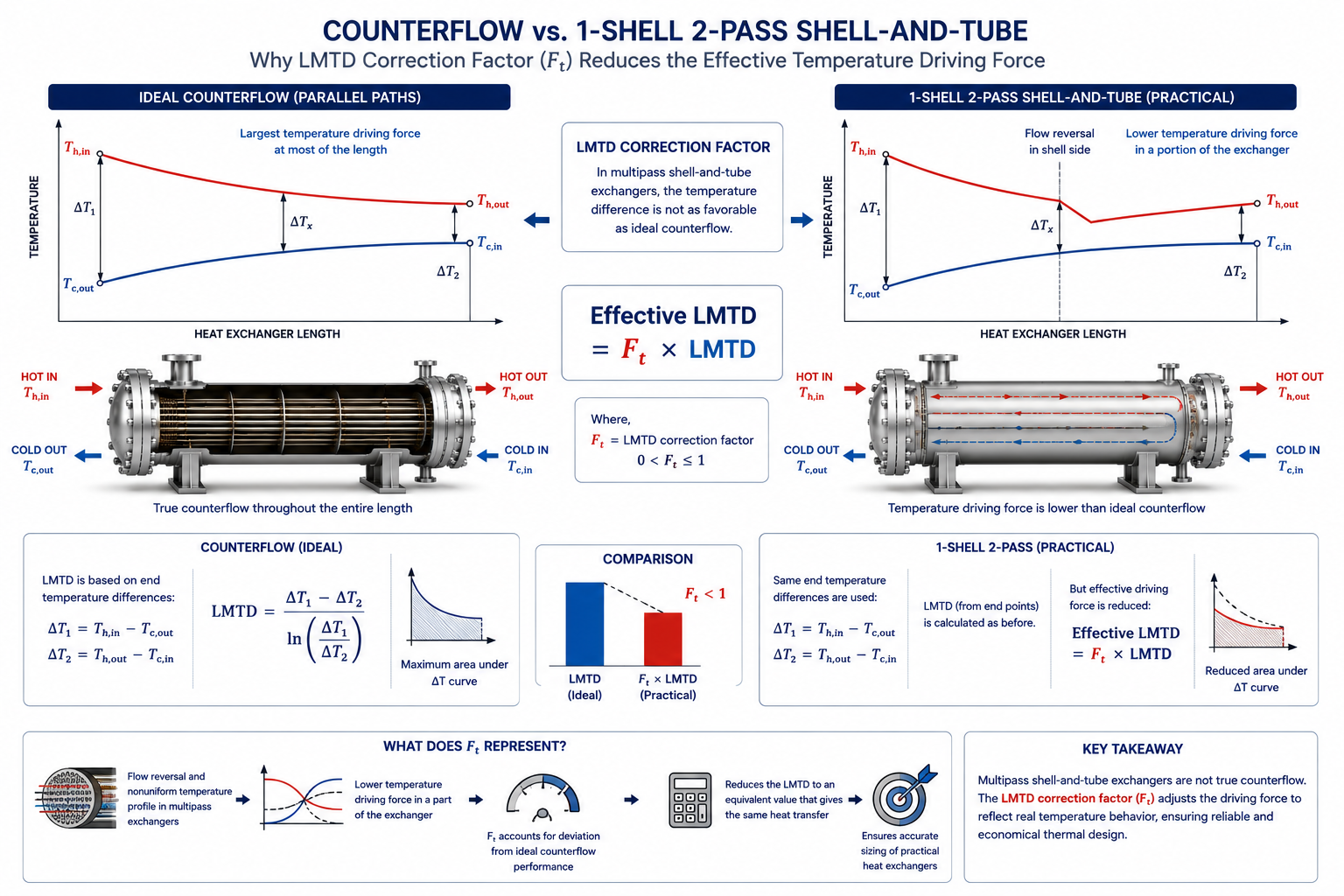
LMTD correction factor Ft for shell and tube heat exchanger thermal design
PPI August 11, 2026 0

Heat Exchanger Correction Factor (F) – Why It Exists in Exchanger Design

Real heat exchangers rarely operate under ideal counterflow conditions. The correction factor exists because practical exchanger flow arrangements behave differently from the textbook assumptions used in LMTD calculations. Why Isn’t…

READ MORE +

Posts pagination

1 2 Next

Recent Posts

  • How Exchanger Fouling Silently Reduces Duty & Increases Cost
  • Why Designers Add Fouling Margin in Exchangers
  • Fouling Factor in Heat Exchanger Design – What It Really Represents
  • Fouling in Heat Exchangers – Why Design Assumptions Fail in Practice
  • What Process Engineers Should Check Before Approving a Heat Exchanger Vendor Drawing

Recent Comments

No comments to show.

Archives

  • October 2026 (6)
  • September 2026 (13)
  • August 2026 (13)
  • July 2026 (9)
  • June 2026 (9)
  • May 2026 (15)
  • April 2026 (18)
  • March 2026 (18)
  • February 2026 (16)
  • January 2026 (12)
  • December 2025 (1)

Categories

  • Heat Exchanger
  • Heat Transfer
  • Terms & Conditions
  • Disclaimer
  • Privacy Policy
  • Contact

2026 processplantinsights.com | Blogging WordPress Theme by Legacy Themes