skip to content

October 13, 2026

processplantinsights.com

processplantinsights.com

  • About
  • Heat Transfer
  • Heat Exchanger

Heat Transfer

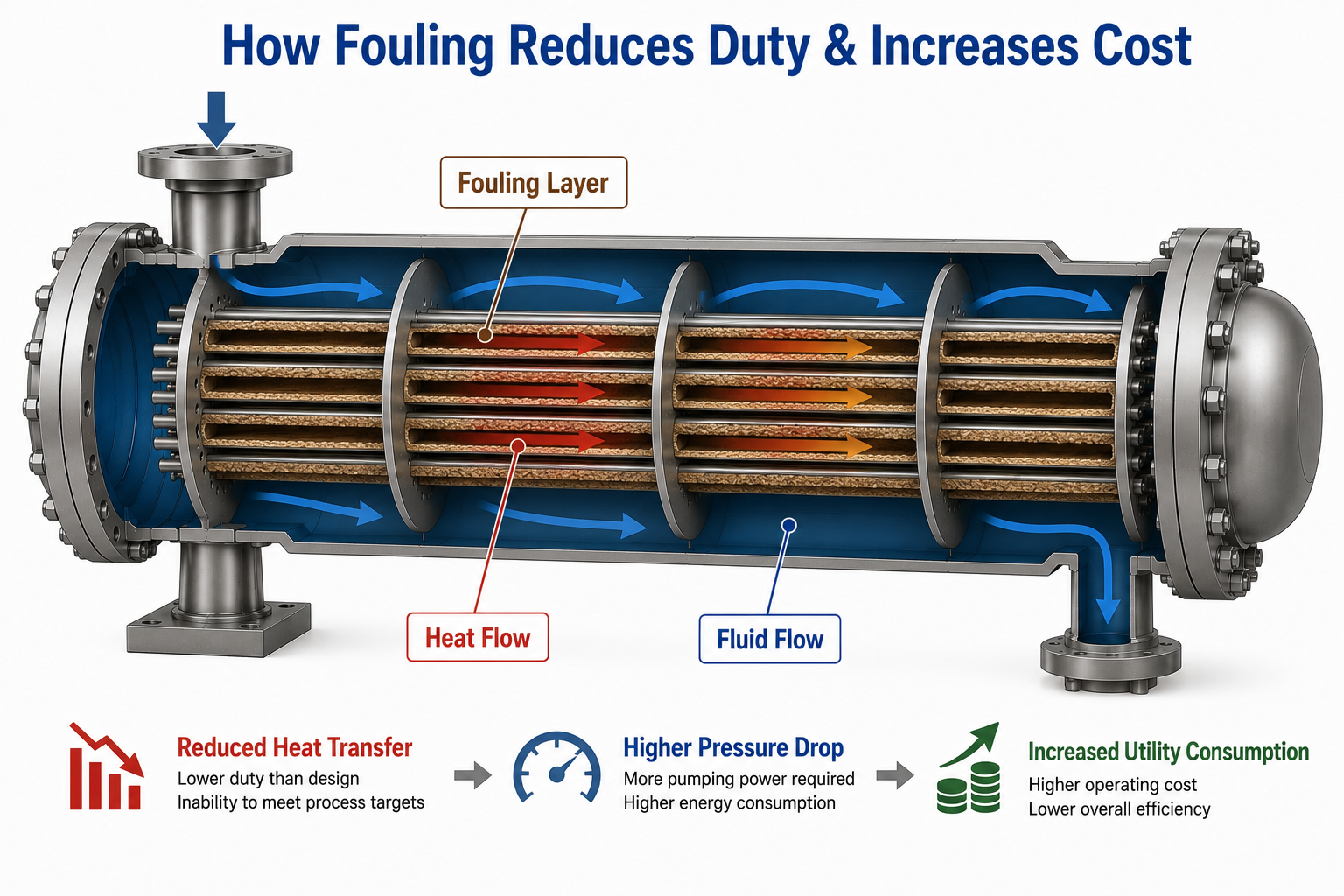
Fouling reducing heat transfer duty and increasing operating costs in a shell and tube heat exchanger
PPI October 13, 2026 0

How Exchanger Fouling Silently Reduces Duty & Increases Cost

Unlike sudden equipment failures, fouling develops gradually and often goes unnoticed until plant performance has already declined significantly. As deposits accumulate inside a heat exchanger, heat transfer efficiency decreases, pressure…
READ MORE +
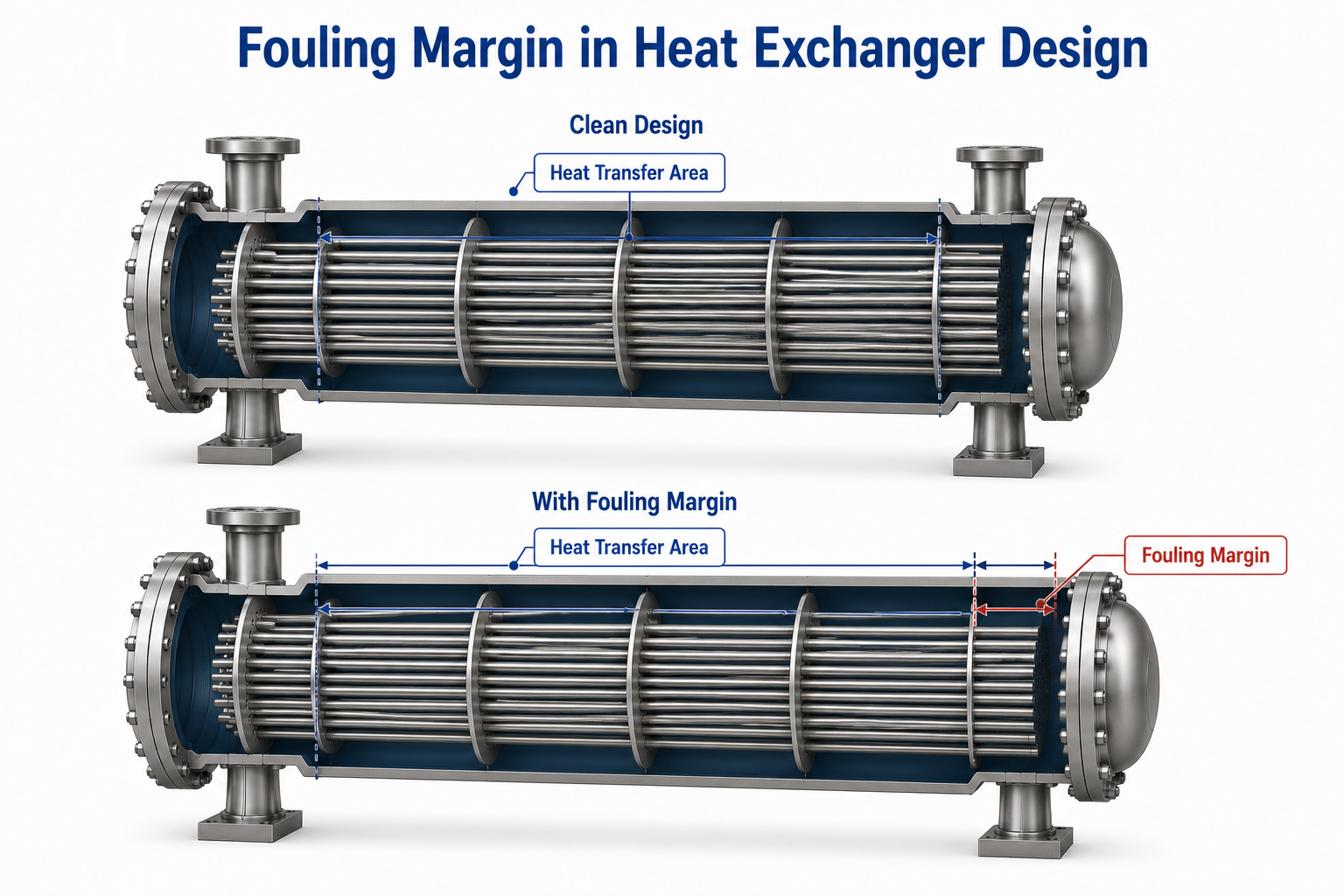
Fouling margin providing additional heat transfer area in a shell and tube heat exchanger
PPI October 11, 2026 0

Why Designers Add Fouling Margin in Exchangers

Every heat exchanger gradually loses thermal performance as deposits accumulate on its heat transfer surfaces. While the fouling factor represents the expected additional thermal resistance, the fouling margin is the…

READ MORE +
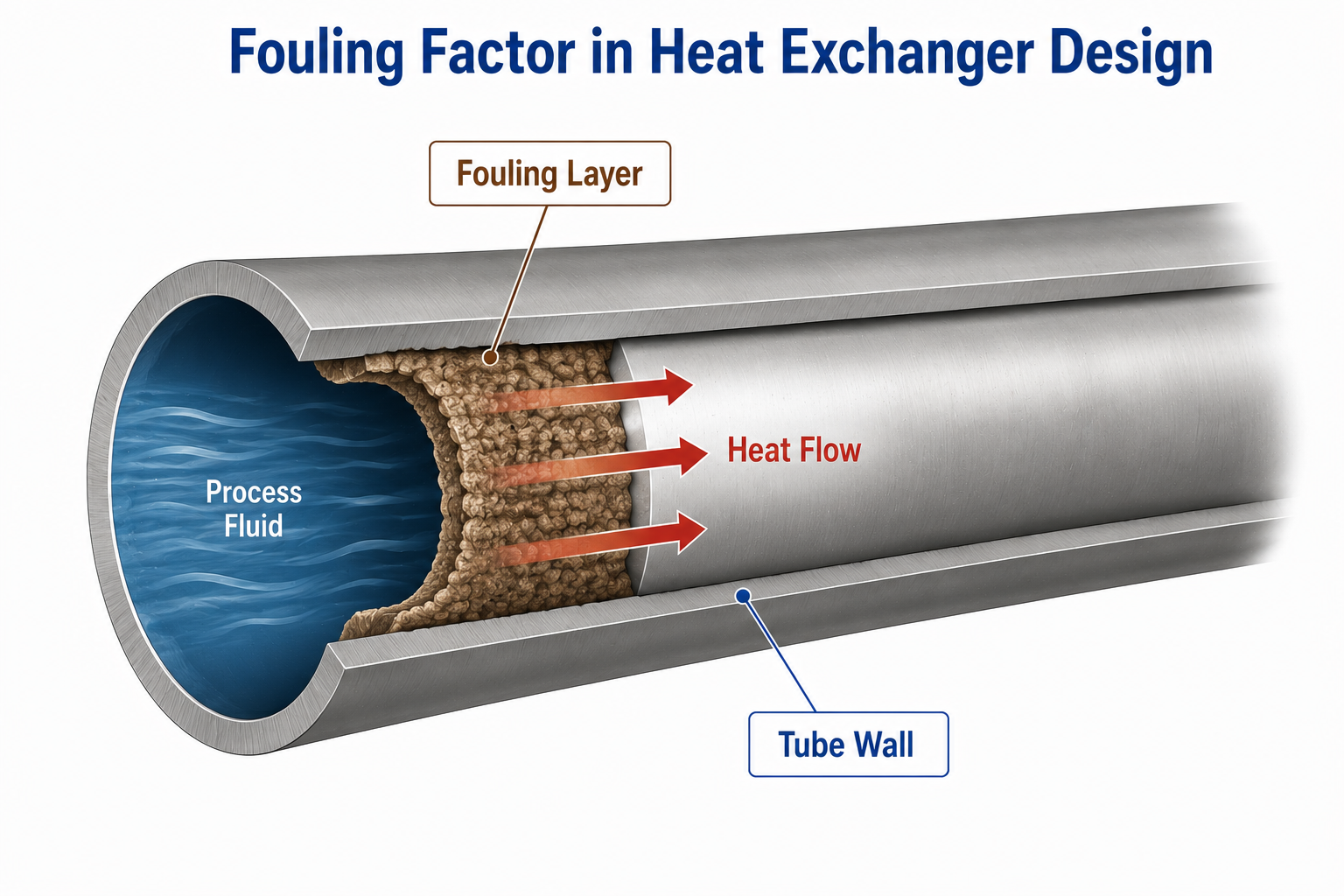
Fouling factor representing thermal resistance in a shell and tube heat exchanger
PPI October 8, 2026 0

Fouling Factor in Heat Exchanger Design – What It Really Represents

Every shell-and-tube heat exchanger is designed with the expectation that its heat transfer surfaces will gradually become less efficient during operation. Rather than assuming permanently clean conditions, engineers include a…

READ MORE +
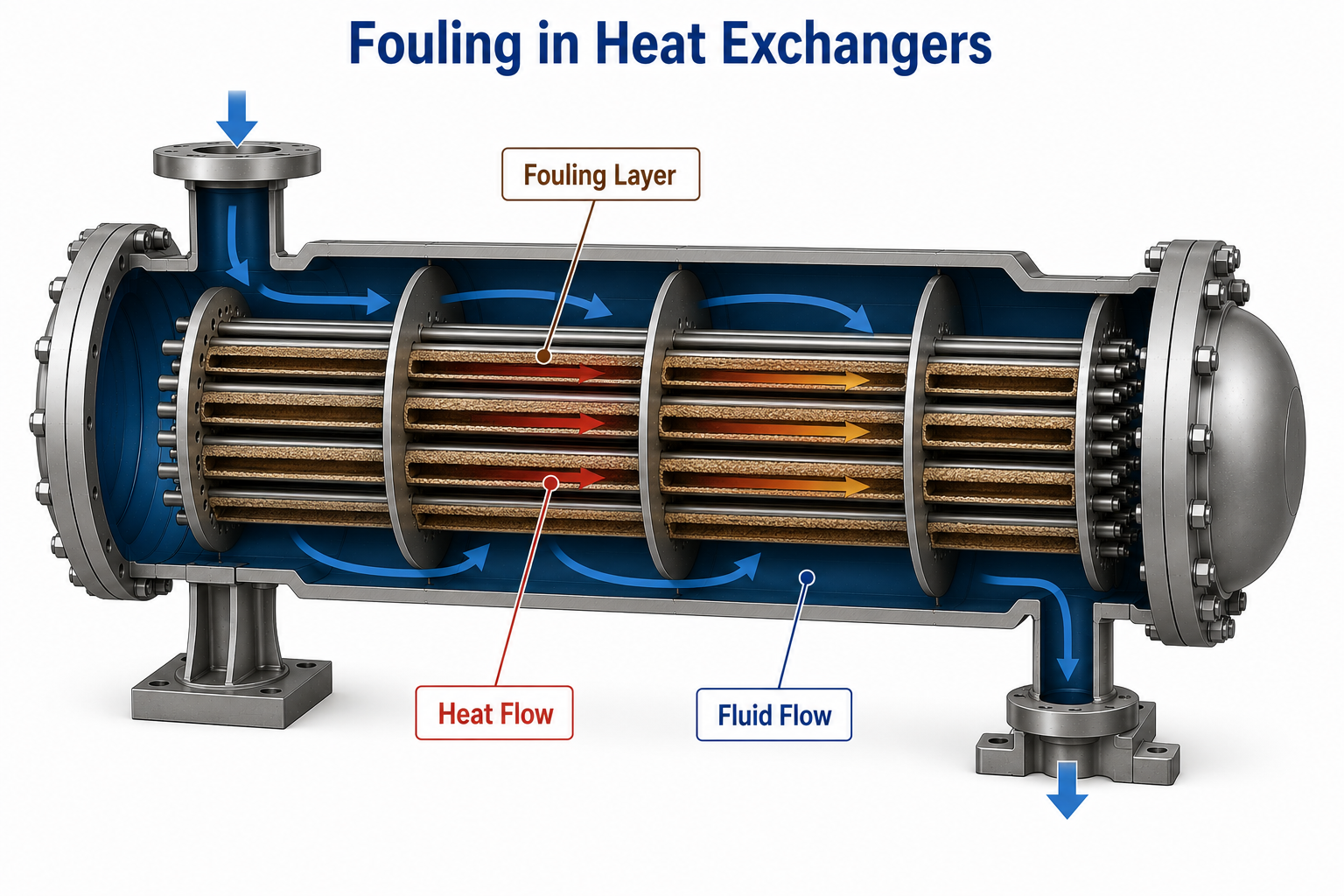
Fouling deposits inside a shell and tube heat exchanger
PPI October 6, 2026 0

Fouling in Heat Exchangers – Why Design Assumptions Fail in Practice

A shell-and-tube heat exchanger may leave the factory in perfect condition, delivering the exact heat duty predicted during design. Yet, over time, many exchangers gradually lose efficiency, consume more energy,…

READ MORE +
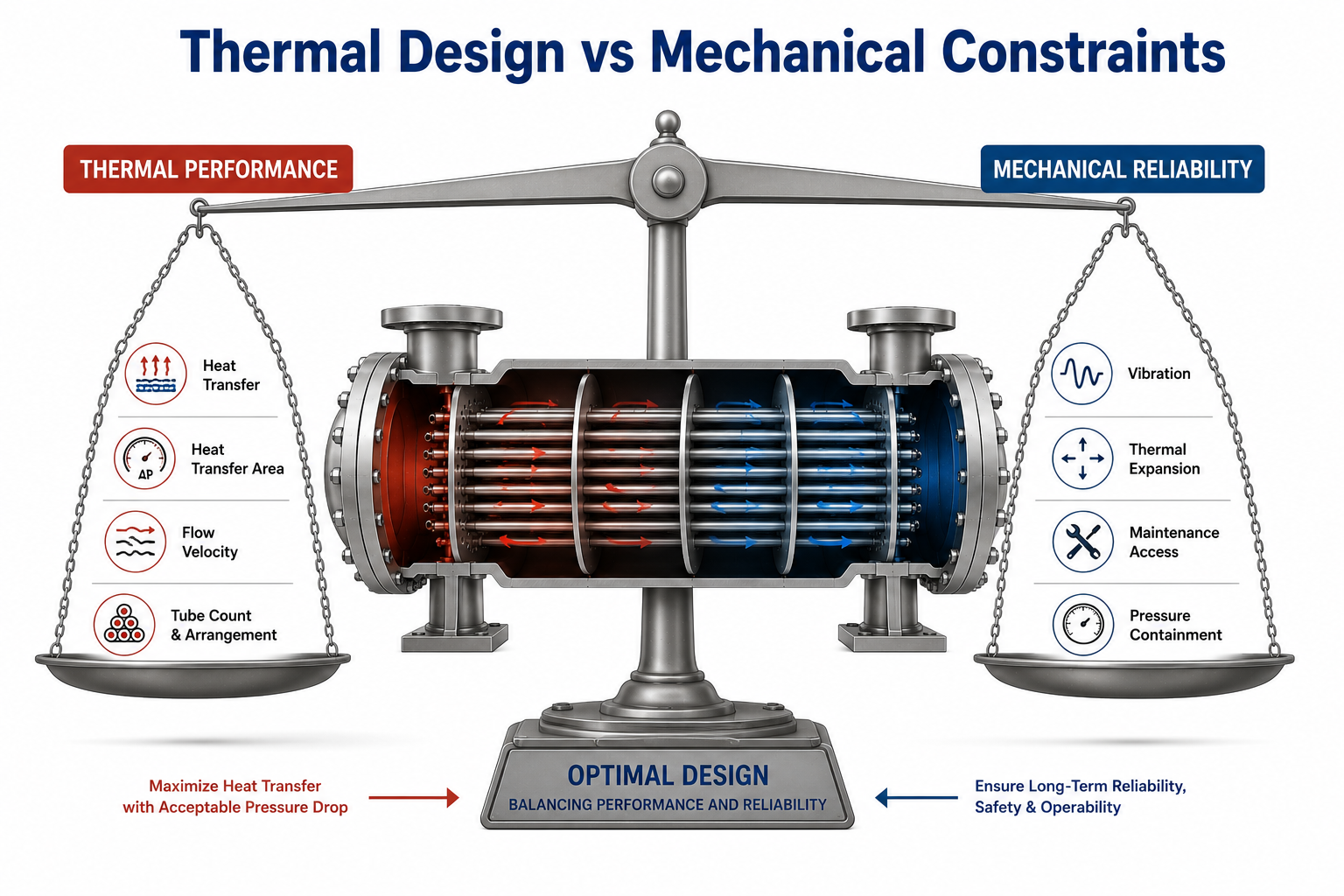
Thermal design balanced with mechanical constraints in a shell and tube heat exchanger
PPI September 24, 2026 0

Why Mechanical Constraints Limit Thermal Design

The thermally optimum heat exchanger is not always the mechanically practical one. While thermal design aims to maximize heat transfer and minimize energy consumption, every improvement must also satisfy mechanical…

READ MORE +
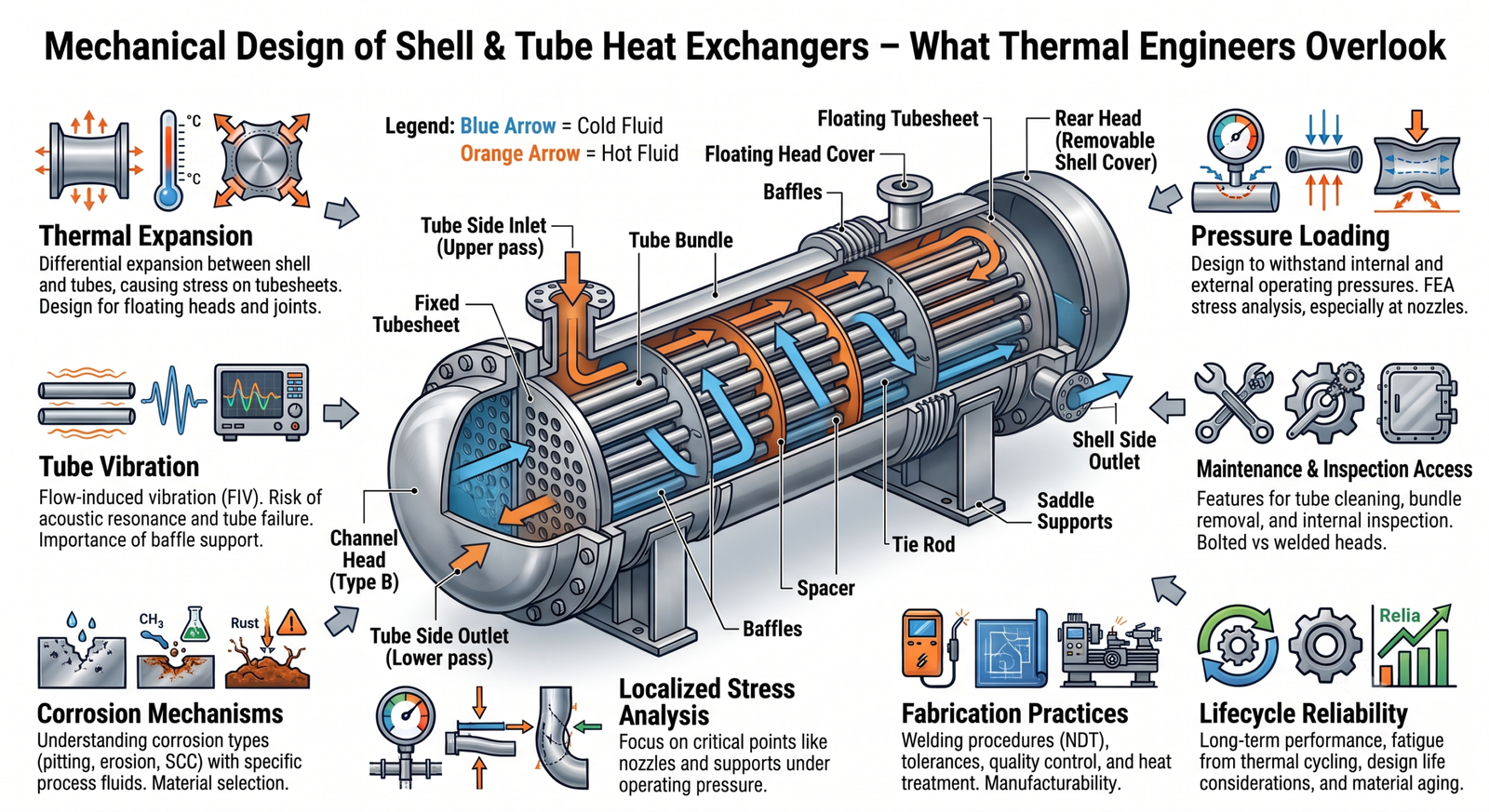
Major mechanical components of shell-and-tube heat exchangers
PPI September 13, 2026 0

Mechanical Design of Shell & Tube Heat Exchangers – What Thermal Engineers Overlook

A shell-and-tube heat exchanger is considered successful only when its thermal, hydraulic, and mechanical designs work together. While thermal calculations determine how much heat can be transferred and hydraulic calculations…

READ MORE +
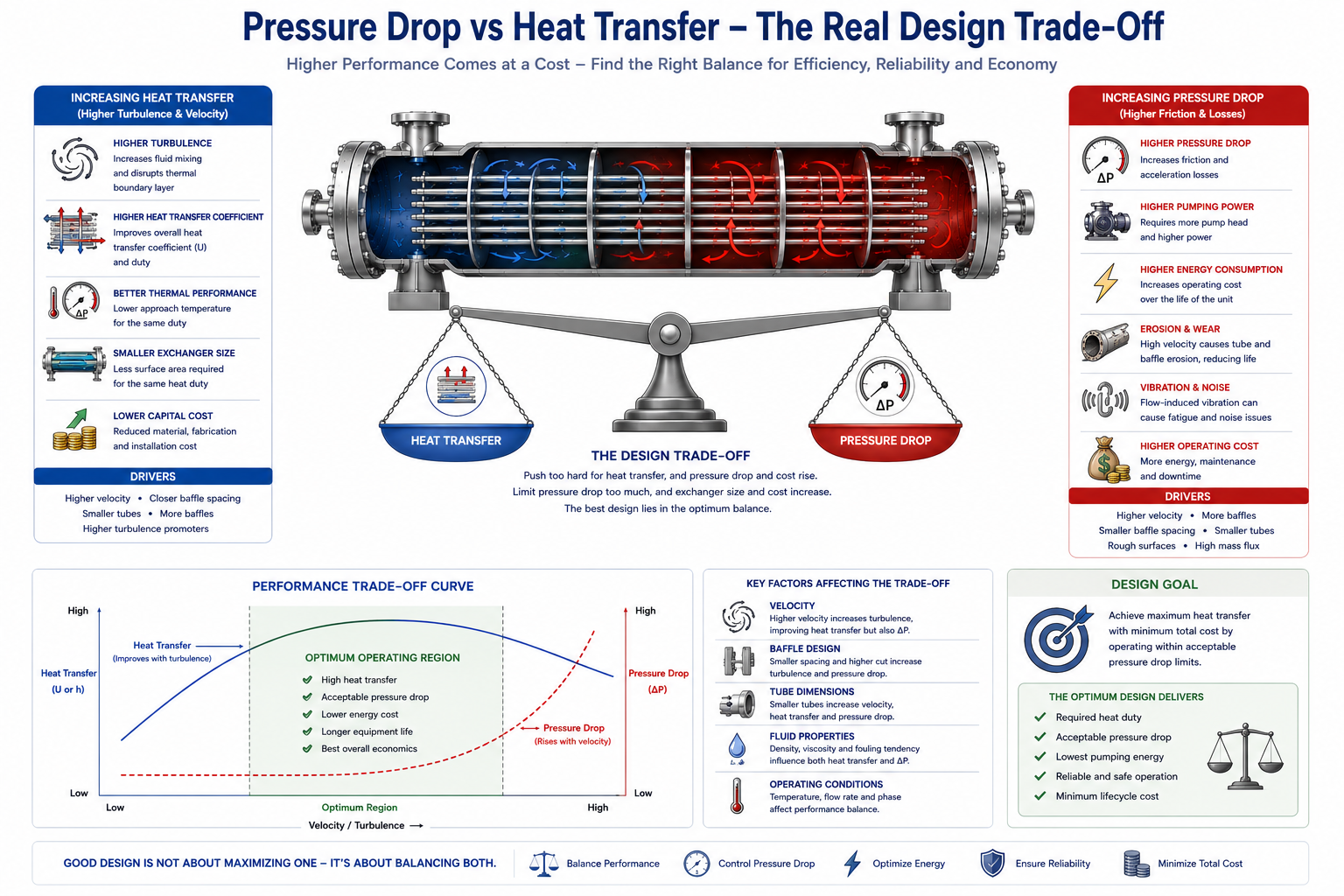
Pressure drop versus heat transfer trade-off in a shell-and-tube heat exchanger
PPI September 3, 2026 0

Pressure Drop vs Heat Transfer – The Real Design Trade-Off

Every heat exchanger designer faces the same engineering challenge: improving heat transfer almost always increases pressure drop, while reducing pressure drop usually weakens heat transfer. The objective is not to…

READ MORE +
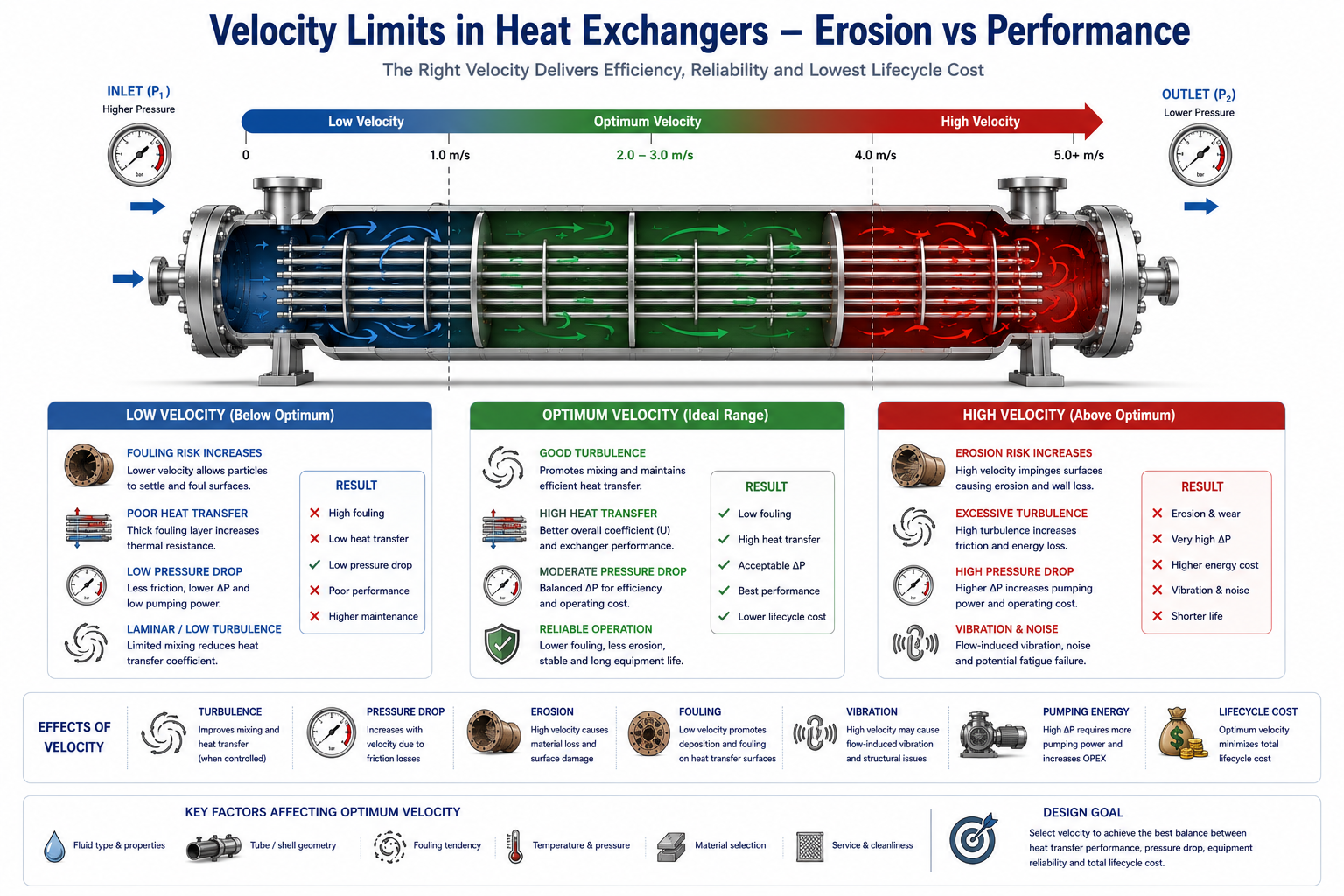
Fluid velocity limits in shell-and-tube heat exchangers showing the balance between erosion and performance
PPI September 1, 2026 0

Velocity Limits in Heat Exchangers – Erosion vs Performance

Fluid velocity is one of the most influential design parameters in a heat exchanger. Higher velocity generally improves heat transfer and reduces fouling, but beyond a certain point it also…

READ MORE +
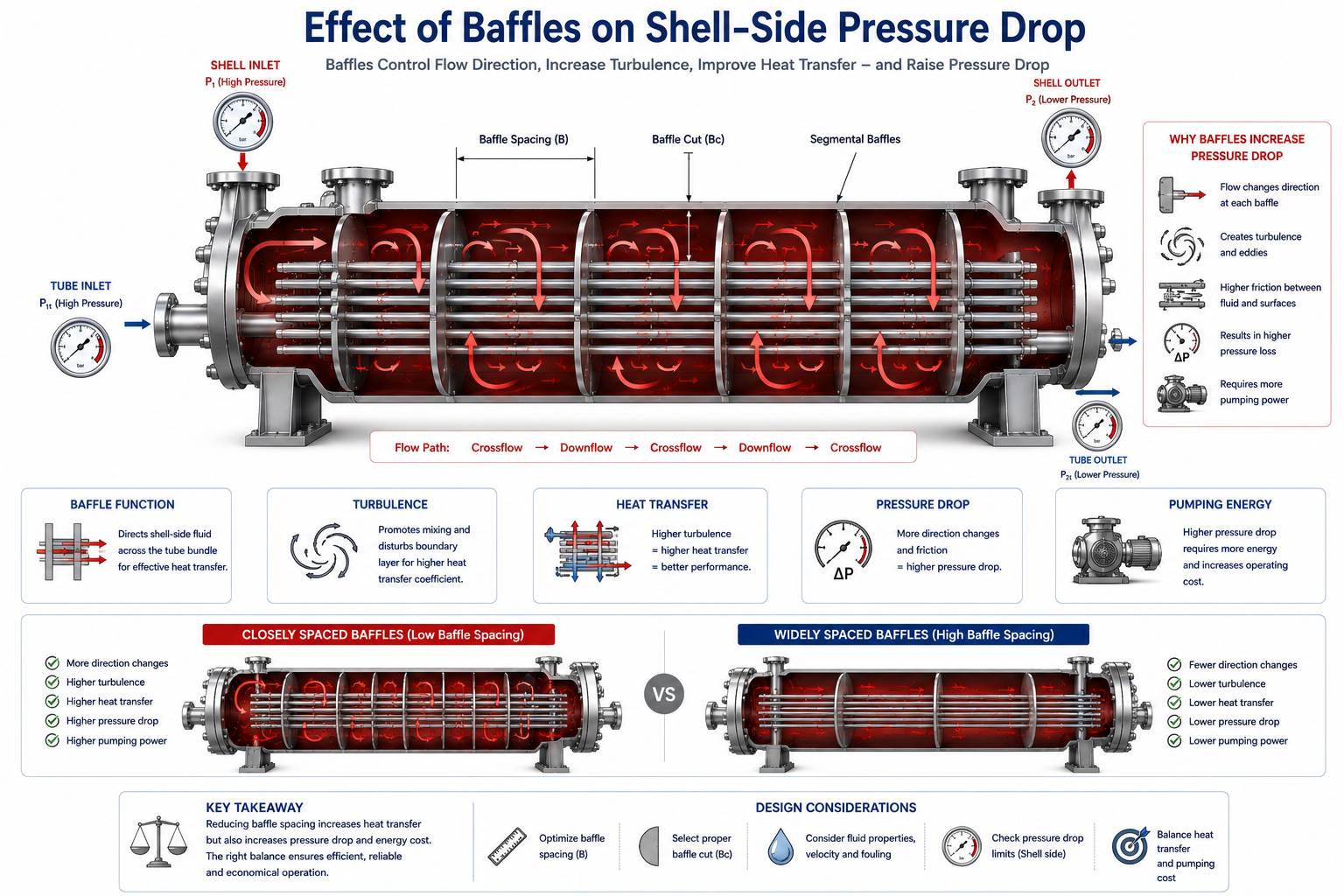
Effect of baffles on shell-side pressure drop in a shell-and-tube heat exchanger
PPI August 30, 2026 0

Effect of Baffles on Shell-Side Pressure Drop

Baffles are among the most important internal components of a shell-and-tube heat exchanger. They improve shell-side heat transfer by directing fluid across the tube bundle, but they also create additional…

READ MORE +
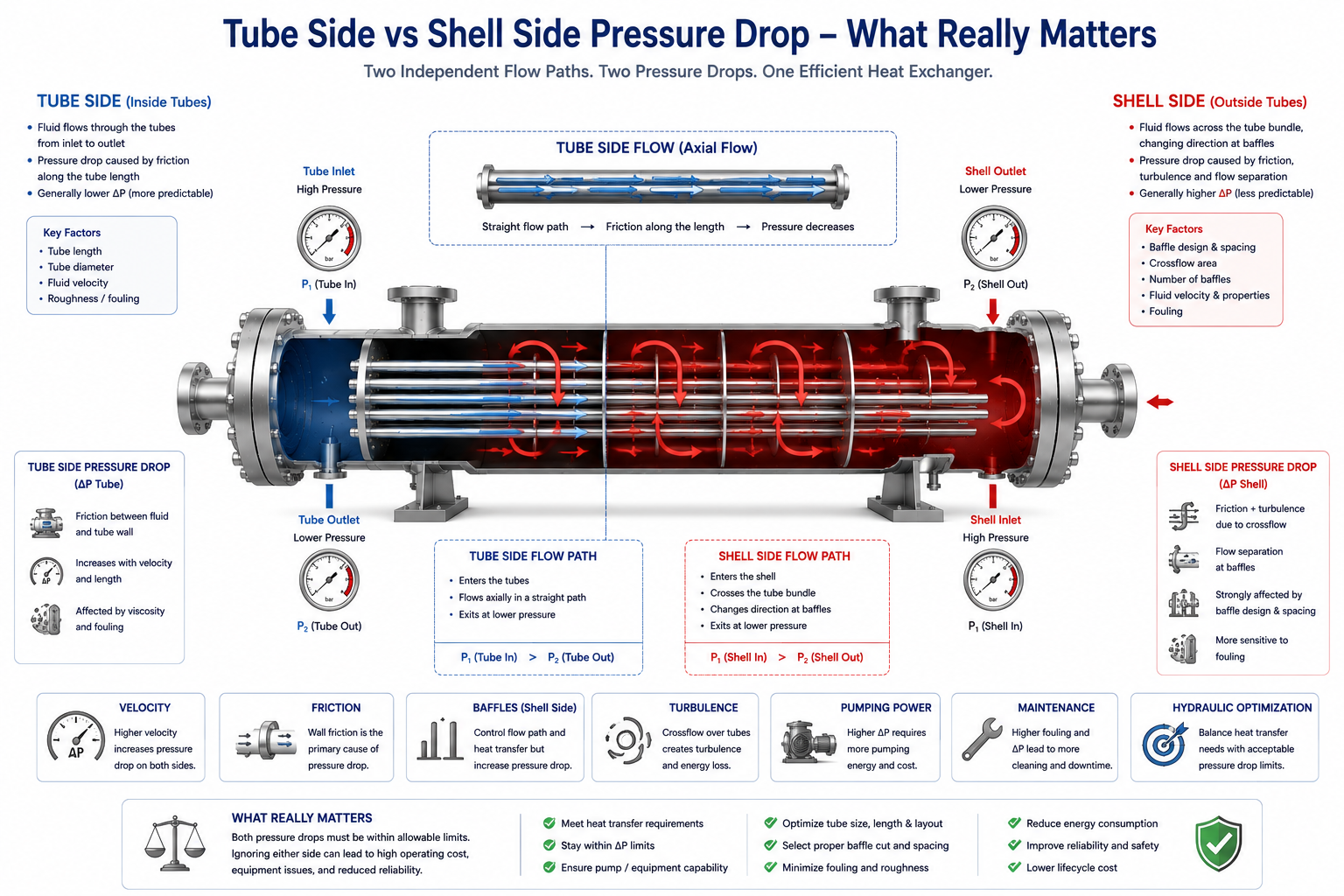
Comparison of tube-side and shell-side pressure drop in a shell-and-tube heat exchanger
PPI August 27, 2026 0

Tube Side vs Shell Side Pressure Drop – What Really Matters

Every shell-and-tube heat exchanger has two separate hydraulic systems—the tube side and the shell side. Although both contribute to the exchanger’s overall performance, they behave very differently, are influenced by…

READ MORE +

Posts pagination

1 2 … 4 Next

Recent Posts

  • How Exchanger Fouling Silently Reduces Duty & Increases Cost
  • Why Designers Add Fouling Margin in Exchangers
  • Fouling Factor in Heat Exchanger Design – What It Really Represents
  • Fouling in Heat Exchangers – Why Design Assumptions Fail in Practice
  • What Process Engineers Should Check Before Approving a Heat Exchanger Vendor Drawing

Recent Comments

No comments to show.

Archives

  • October 2026 (6)
  • September 2026 (13)
  • August 2026 (13)
  • July 2026 (9)
  • June 2026 (9)
  • May 2026 (15)
  • April 2026 (18)
  • March 2026 (18)
  • February 2026 (16)
  • January 2026 (12)
  • December 2025 (1)

Categories

  • Heat Exchanger
  • Heat Transfer
  • Terms & Conditions
  • Disclaimer
  • Privacy Policy
  • Contact

2026 processplantinsights.com | Blogging WordPress Theme by Legacy Themes